African Politics and Government : Post-Cold War Challenges
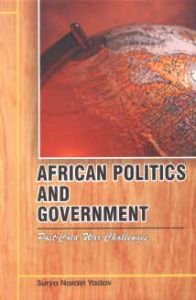
Contents: Preface. 1. Features and functioning of the post-independent African political system. 2. Post-Cold War profile of the African economy and its impact on political system. 3. Economic inequality and political instability: an overview of the African continent. 4. Emerging trends and future prospects of democracy in contemporary Africa. 5. New challenges for multiparty democracy in the post Cold-War Africa. 6. Movement system of governance in contemporary Uganda. 7. National security and democracy: a case study of the new South Africa. 8. Democracy in Morocco: challenges and prospects in the 21 century. Appendices. Bibliography. Index.
"African politics and government have experienced tectonic transformation in the Post-Cold War era. The transition from authoritarianism to multi-party democracy is the distinguishing feature of the post Cold-War African political system.
This book has critically examined the role of indigenous as well as exogenous factors accountable for the emergence of democratic form of government in Africa. Equally significant, the author has identified the various issues, like ethnicity, corruption, crime and violence posing serious threats to the process of democratisation in Africa. Quite remarkably, the author has also thoroughly investigated the actual and potential impact of democratisation on the socio-economic development and protection and promotion of national security and human rights in Africa and its overall implications for the political system of the developing world." (jacket)
