An Anthology Of Gujarati Dalit Literature
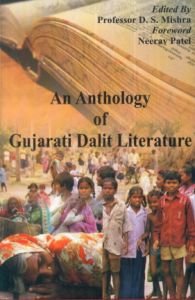
Contents: Acknowledgements. Introduction/Neeraj Patel. Poetry: 1. Farewell to arms; My shadow; Brainwash/Praveen Gadhvi. 2. Untouchable; The conversation on a Magshar Night; The tortured time/Dalpat Chauhan. 3. From Broom to mouth; A Journey by Bus down the countryside/Shankar Painter. 4. The valley; A complaint/Harish Mangalam. 5. Conversation with wife; When I was born; Mother, give me moon/Sahil Parmar. 6. Overbridge; Misfortune; In a Chawl of closed mills; Honour be to you/Bhi Na. Vankar. 7. Identity; Mummy/Yashwant Vaghela. 8. Self-pride/Shamat Parmar. 9. The song of our shirt; Exiled flowers; Kaliyo/Neerav Patel. 10. To walk on the feet mattered most; The Dalit Ghetto; The Two divers/Raju Solanki. 11. Harsh destiny/Raman Vaghela. 12. Talk about; You Write/A.K. Dodiya. 13. Do something; The Corpse; You awake, My sister’s Son/Purushottam Jadav. 14. The stink of the Hellpit; The portrait/Jayant Parmar. 15. The inheritance; Do you hear it?; You too/Kisan Sosa. 16. Why don’t you write?; Gokul and Kaniyo/Pathik Parmar. 17. Awareness; The Movement Day/Madhukant Kalpit. 18. When the sixth sense awakens/Shyam Sadhu. 19. Ghazal 1 to 3/Harivan Dafda. 20. Equal lines/Buddhidha Visnagri. 21. To the fading man I Singh; To A Poet at a Mushaira/Bipin Gohil. 22. Eklavya Day; Another world/Dan Vaghela. 23. Blessed Harijan/Usha Makwana. 24. Waiting/Meena Kamle. 25. Cold-blooded murder/Priyanka Kalpit. 26. In memoriam-Narayan Dhule/Parbat Parmar. II. Short story: 27. The stable/Mohan Parmar. 28. Transposition of body/Dasharath Parmar. 29. Cold blood/Dalpat Chauhan. 30. Faith/Harish Mangalam. 31. The hell/Dharmabhai Shrimali. 32. Queen of black/Jasumati Parmar. 33. Creamy layer/Neerav Patel. III. Novel: 34. Angaliyat/Joseph Macwan. 35. Daya Pashani Vadi/Mohan Parmar. 36. Savitri/Daxa Damodara. 37. Spearlike pain/B. Kesharshivam. 38. Flame of the heat/Harish Mangalam. V. Drama: 39. A true saga of Satyanarayan/Mohan Parmar. 40. At the Pasture of Patan/Dalapat Chauhan. 41. Switch it on now/Harish Mangalam. VI. Autobiography: 42. Aatmakatha/Lalit Parmar. 43. Many remembrances of past/Khemchand Chavda. 44. Ektara goes on ringing/Vitthal Rai. 45. The destinationo f freedom-still miles to go/Vinubhai H. Bhairaviya. 46. What did I do to be so black and blue/Neerav Patel. Select bibliography. Index.
Gujarati Dalit Literature is committed to the plight of Dalit Community, particularly the SC, the ST and the Baxi panch groups. It straightforwardly deals with discrimination and exploitations of these communities. It emphasizes the theme of exposition of the sufferings of non-high castes people and pays little attention to the forms of literary pieces. It has been widely criticised for the lack of forms. It has been widly criticised for the lack of forms. But Gujarati Dalit Literature is quite recent and to expect perfection of forms at this stage is too much. We can only say that Gujarati Dalit Literature is rough diamond. But more than this, it is the theme that takes the form. If the theme is powerful, it will take the care of the form. In this respect selected Gujarati Dalit Literature is the veritable example of the theme that takes the form at the same time.
This Anthology contains the creative writings by Dalit writers because they have direct experiences and realizations of Dalit Communities. But it does believe that non-Dalit writers can also produce Dalit Literature provided they have Commitment to dalit experience and dalit ideology. However, due to paucity of pages, the writings of non-Dalit Literature could not be included in this anthology. The editor regrets it.
Though Gujarati Dalit Literature is inspired by Dr. Ambedkar\'s ideology and Marathi Dalit Literature, it has its own independent identity. A few Comparatively young and moderately Gujarati Dalit poets and writers, exposed to national and world literature, dedicate themselves to neglected areas of experiences in literature of the time. They decide to expand the horizon of literature, they explicated the vision of treating a Dalit at least as a Human being. This vision, it is sure, will be helpful to the researches, professors, general readers and a common man without fail.
