Applied Philosophy, Value Theory and Business Ethics
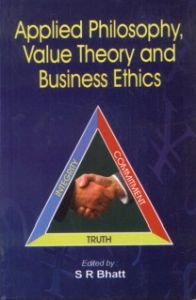
Contents: I: Prologue. 1. Some Reflections on applied Philosophy in Indian context. 2. Morality, Law, Ecology and Biotechnological Research. II: 3. Philosophy of Education. 4. Education for Character Development and Career Making. 5. Vedic System of
Education and Environmentalism. 6. Buddhist Economics of Compassion and Communion.
Philosophy, as a foundation of all knowledge, is essentially practice-oriented. It is both a view of reality and a way of life. It is not just love of wisdom as the etymology of this word suggests, but it is also shaping of life in accordance with the acquired wisdom. It is of course a theoretical enterprise but it is not speculative if it is worthwhile. It has practical applications as theory without practice is lame and futile and conversely practice without theoretical foundation is blind and at random. Practical nature of philosophy was very much emphasized in the Indian tradition. Dars’ana (or Anviksaki) the Indian equivalent of philosophy, was recognized as the basis of all modes of knowing and ways of living. The same is true of Greek philosophy as well.
Though philosophy is global in its theoretical formulation, its application has to be local or regional in concrete life situations and therefore Indian context is predominantly put forth here. There are many works available having western overtones and hence also this shift in emphasis. (jacket)
