Archaeology of Early Orissan Temple : Spatial Context Patronage and Survival
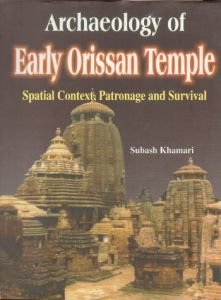
Contents: Foreword. Preface. 1. Concept and contour. 2. Structural elaboration: architecture and narratives. 3. Administering the resources: patronage. 4. King and temple. 5. Ritual and temple. 6. Survival and decay. 7. Conclusion. Glossary. Bibliography. Appendices. Index.
The existing historiography, while dealing with the early temples of Orissa, perceives them as static architectural unites and seldom delves into meaning beyond the form. This book elaborates on how the monument also has a life after its construction, and can interact with the community over a period of time in significant ways beyond the intention of its artists reflecting a palpable dynamism beneath its architectural configuration. A temple, as ritual instrument, built for the community, weaves individuals as well as communities into a complex web and dynamic social fabric over time. Juxtaposing patrons achieving religious merit and social fame, the temple is metrically proportionate to their resources and aesthetic dexterity of the artists.
The community as patrons artists, priests and laity, interacting with the temple played a conspicuous role in the temple scape of Orissa. It is evident that the temple is not simply a structure of one period or even of one community. It moves through time, constantly repositioning itself to survive. The book makes copious documentation of temples in pre Jagannath period from architectural and epigraphic sources to argue that poly religiosity defines the cultural landscape. Taking a broad as well as in-depth view of 233 temples, hitherto latent in research, it deals with segmentation of space, elaboration, narratives, rituals and survival of temple from 6th 11th century A.D. (jacket)
