Armenians in Asian Trade in the Early Modern Era
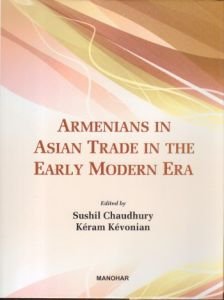
Contents: Introduction. I. Les armeniens dans le commerce international et intercontinental Armenians in international and inter-continental trade: 1. Questionnaire pour les armeniens aux 17 et 18 siecles. Presence position et place dans poekoumene economique/Michel Morineau. 2. Participation of Iranian Armenians in world trade in the 17th century/Vahan Baibourtian. II. Les Armeniens et la Nouvelle-Djoulfa Armenians and New Julfa: 3. Wealthy merchants and factors. The legacy of Julfa/Vazken Ghougassian. 4. The commercial law of the New Julfa Armenians/Edmund Herzig. 5. The architecture of new Julfa/Armen Haghnazarian. III. Les Armeniens dans le commerce regional et inter-regional Armenians in regional and inter-regional trade: 6. Caucasian elites and early modern state-building in Safavid Iran/Ina Baghdiantz McCabe. 7. Armenians in Asian trade 16th and 17th centuries/Shireen Moosvi. 8. L’ Armenien Khodja Murad entre I’ethiopie et les Indes neerlandaises: 1663-1699/Emeri van Donzel. 9. Armenian involvement in Ethiopian Asian trade 16th to 18th centuries/Richard Pankhurst. 10. Armenians in Bengal trade and politics in the 18th century/Sushil Chaudhury. IV. Les Armeniens Dans L-Ocean Indien Armenians in the Indian Ocean: 11. Armeniens et portugais dans les reseaux d information de I ocean Indien au 16 siecle/Dejanirah Couto. 12. Armenian merchants in Portuguese trade networks in the Western Indian Ocean in the early modern age/Joao Teles e Cunha. 13. Protection of trade routes in the 17th century safavid state/Vahan Papazian. 14. Up from the watery Deep. The discovery of an Armenian gravestone in the South China Sea/Susan Schopp. V. Les Armeniens et La Finance Armenians and Finances: 15. The bill of exchange in the Milieu of new Julfan Armenian merchants/Shushanik Khachikian. 16. Numeration calcul comptabilite et commerce/Keram Kevonian. Postface. Index.
The ability of the Armenian traders to measure the risks of long-distance trade and a readiness to vary the size of commercial transactions, their capacity to thrive on low profit margins and move into remote producing centres, appointing their own kith and kin or people of their own community as their agents were some of the important factors for their phenomenal success in overland trade from the sixteenth through the eighteenth century.
The present volume showcases that the scale of what individual caravan could transport might produce reservations concerning grand affirmations, but the quick succession of such enterprises, the network they supplied and from which they drew their products put paid to such skepticism. This was especially true when this perspective was combined with the sure knowledge that those who organized enterprises held together both production and a solid link with maritime options.
This comprehensive study on the role of Armenians in the long-distance trade in Asia will help refute afresh and convincingly among many others the canard that the Portuguese and not the Asians, were the dominant factor in the Indian ocean trade in the sixteenth century and that the advent of the Companies in the early seventeenth century sounded the death-knell of the traditional overland trade of the Asian merchants. (jacket)
