Astanga Hrdaya of Vagbhata Vol. I : Sutra Sthana and Sarira Sthana
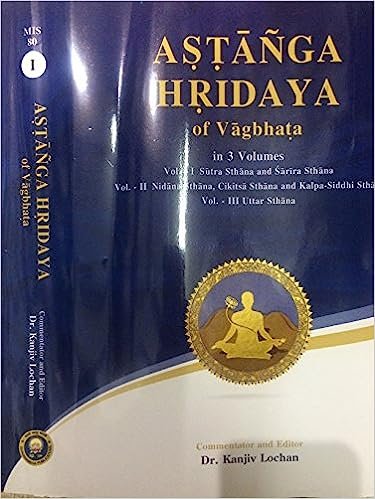
Contents: Preface and acknowledgements. Introduction. 1. Ayuskamiya (On longevity). 2. Dincarya (On daily regimen). 3. Ritucrya (On seasonal regimen). 4. Roganutpadaniya (On preventive medicines). 5. Dravyadravya Vigyana (On science of herbs). 6. Annasvarupa Vigyaniyam (On science of cereals). 7. Annaraksa (On proper use of cereals). 8. Matrasitiya (On appropriate amount of eatables). 9. Dravyadi Vigyaniya (On knowledge of substances). 10. Rasabhediya (On classification of tastes). 11. Dosadivigyaniya (On knowledge of dosas, etc.). 12. Dosabhediya (On classification of dosas, etc.). 13. Dosopakramaniyam (Treatment of the dosas). 14. Dvividhopakramaniya (Two kinds of treatments). 15. Sodhanadigana Sangraha (On groups of herbs for purificatory therapies, etc.). 16. Snehvidhi (On Oleation Therapy). 17. Svedavidhi (Sudation therapy). 18. Vamana Virecana Vidhi (Emesis and Purgation Therapy). 19. Bastividhi (Enema Therapy). 20. Nasyavidhi (Nasal Medication). 21. Dhumpanavidhi (Smoke Therapy). 22. Gandusadi Vidhi (On mouth gargles and another). 23. Ascotana Anjana Vidhi (Eye-drops, Anjana Therapy, etc.). 24. Tarpana Putapaka Vidhi (Satiating the eye and other therapies). 25. Yantra Vidhi (Usage of blunt instruments and appliances). 26. Sastra Vidhi (Usage of sharp instruments). 27. Siravyadh Vidhi (Process of Venesection). 28. Salyaharana Vidhi (Removal of foreign bodies). 29. Sastrakaram Vidhi (On procedure of surgical operation). 30. Ksaragnikarma Vidhi (On process of cauterization). Appendixes: i. Illustrations of surgical instruments. ii. Name of seers and authorities. iii. The poetic metres. iv. Number of Slokas. v. The index of Slokas. vi. Herbs and their group. Subject index.
From the Preface: "The readers may notice that the serial nos. of the various Slokas in the Astanga Hrdaya's various manuscripts available have been paralleled by a different serial no. The involved passages are the interpolations made by various commentators of the text. These interpolations have been included in the present edition.
The problem of proof work of the text has been compounded by a multiplicity of readings of the work. The author tried our best to address this issue and are confident that this edition of the Astanga Hrdaya would be appreciated by the scholars.
The Astanga Hrdaya is representative of that current of scientific ideas in ancient India that appreciated the traditions and at the same time tried to project newer ideas. It has not only carried the ideas of Caraka and Susruta but it has also sought acceptance of certain modification on them. The readers would appreciate this and many other marvels of its author Vagbhata as the text is unfolded. The present edition has been a result of a long-stretched labour. The author have tried to consult all the available readings of this text."
