Budgets and Budgetary Procedures in India, 1947-48 to 2009-10
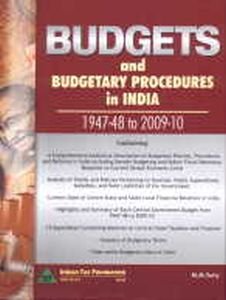
Contents: Author’s note on the book. I. Government budgeting: conceptual framework: 1. Economic role of modern governments and budgetary policy. II. Government budgeting in India: 2. Government budgeting in India: Constitutional provisions and procedures. 3. Structure of the Central Government Budget. 4. Functional, economic and cross-classification of the budget. 5. Budgetary reforms in India. III. Taxes, public expenditure, subsidies and public debt in India: 6. Constitutional provisions pertaining to taxes. 7. Central government taxes. 8. Central government expenditure. 9. Central Government subsidies. 10. Central Government debt liabilities. 11. State Government Taxes. IV. Centre-state and state-local financial relations in India: 12. Centre-state financial relations. 13. Transfer of resources through the Finance Commission. 14. Constitution (Eightieth Amendment) Act, 2000 and the sharing of Revenue from All Centre Taxes. 15. Twelfth Finance Commission: main recommendations. 16. Transfer of resources through the Planning Commission. 17. State-local financial relations in India. V. Highlights and summary of each Central Government Budget from 1947-48 to 2009 - 10. VI. Appendices. VII. Glossary of budgetary terms. VIII. Time-series budgetary data of India. Select bibliography. Index.
“As a financial blueprint of a government, budget is an important instrument to carry out its policies and programmes. It is through the budget that a government arranges financial resources and allocates them among competing uses. Government budgeting is a subject of increasing importance and interest in India. The high level of administrative, welfare and developmental activities of the Central Government make for colossal amounts of both receipts and disbursements. Such large-scale public transactions through the budget affect the economy in various ways.
This book provides an exhaustive and analytical account of budgetary developments in India since independence in 1947 with focus on post-1991 reforms. The work is organized into 8 parts, each part containing chapters/information dealing with some aspect of budgetary policy in India.
Part I explains the economic role of modern governments, particularly in developing countries. It describes various reasons for state intervention in the working of an economic system with special reference to the provision of public goods. Modes of state intervention are also explained. Furthermore, it provides conceptual framework for budgetary techniques.
Part II of this book work explain (a) constitutional provisions and parliamentary procedures and controls applicable to the budgetary exercise of the Government of India, (b) structure of the Central Government budget (c) functional, economic and cross-classification of the budget and (d) recent budgetary reforms in India including gender budgeting.
Part III is devoted to taxes, expenditure, subsidies and debt liabilities of the Central Government. It has includes taxes of the State Governments.
Part IV explains the nature of centre-state and state-local financial relations in India and the existing arrangements for inter-governmental financial transfers.
Part V contains highlights and summary of each Central Government Budget from 1947-48 to 2009-10.
Part VI consists of 12 appendices which provide supplementary information related to the budgetary exercise of the Government of India.
Part VII contains glossary of budgetary terms.
Part VIII provides time-series budgetary data of India.
This work would prove useful for the students of economics, commerce, public administration and business management. An understanding of the mechanics of governmental financial transactions will also serve the needs of legislators, administrators and those in industry and trade.” (jacket)
