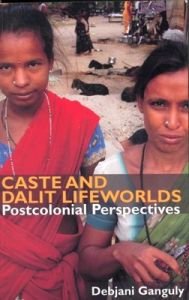
Caste and Dalit Lifeworlds : Postcolonial Perspectives
Contents: Prologue. 1. Modernity, postcoloniality and the New Humanities: towards a non-holistic reading of caste. I. Caste and theoretical horizons: 2. The dark rock of Indian tradition: caste and orientalism. 3. The anomalous insider: caste and nationalism. 4. An intractable dualism: caste and Marxism. 5. On the other side of revenge: caste and post-Orientalism. II. Caste, life-world, narrative and the aesthetic: 6. Dalit mythographies: Ambedkar as modernity's interlocutor. 7. Buddha, bhakti and 'superstition': a post-secular reading of Dalit conversion. 8. Of urban dystopias and new gods: readings from Marathi Dalit Literature. 9. Chandra, Velutha, Ammu, death: the aporia of the aesthetic. Epilogue. Notes. Bibliography. Index.
"Caste and Dalit Lifeworlds attempts to come to terms with the presence of caste in late modern India by asking two questions: How do we read caste today? Why is it no longer enough to brand caste as pre-modern and backward? The author argues that caste is less an essence responsible for India's "backwardness" as an assemblage of a variety of secular and non-secular practices and affects that generate everyday life in India, while being in a constant state of flux--something that cannot be completely contained in a narrative of nation-building, modernization and development. In order to illustrate the importance of reading caste in this light, she turns her archival and analytical focus on both caste Hindu and Dalit literary, mythographic and religious texts. The attempt is not to endorse either the caste-system or casteism, but to resist the reified ways in which caste continues to figure in social, scientific and nation-building discourses."
