Comprehensive Pathology: Practical and Technical Book
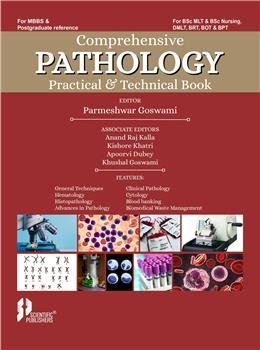
Contents: Section I: General Techniques in Pathology. 1. Lab Safety Guidelines. 2. SI Units and Conventional Units used in Hospital Lab. 3. Various Instruments and Glassware used in Lab. 4. Microscope: Use and Care of Microscope, Dark Ground Microscope and Fluorescent Microscope. 5. Maintenance of Records and Filing of Slides. Section II: Hematology. 6. Haemopoiesis and Stem cells. 7. Blood in General: Normal Constituents of Blood, Collection of Blood samples, Sequence of Filling of Tube and Anticoagulants. 8. Hemoglobin Estimation. 9. PCV (Packed cell volume) or Hematocrit. 10. ESR : Erythrocyte Sedimentation Rate. 11. Absolute Eosinophil Count. 12. Anemia: IDA, Megaloblastic, Pernicious and Thalassemia. 13. Calculation of Red Cell Indices. 14. Preparation and Staining of PBF for Morphology of RBC and WBC, TLC, TRBC, TPC (Total Platelet Count). 15. Reticulocyte Count. 16. Investigation of Megaloblastic Anemia, B12 and Folate Assay, Schilling Test. 17. Investigation of Iron Deficiency Anemia, Estimation of Serum Iron and Iron Binding Capacity. 18. Test for Autoimmune Hemolytic Anemia. 19. Hemoglobin Electrophoresis. 20. Sickling Tests. 21. Osmotic Fragility Test. 22. Determination of HbF and HbA2. 23. Investigation of G6-PD. 24. Plasma Haptoglobin and Hemosiderin in Urine. 25. Measurement of Abnormal Hb Pigment. 26. Normal Hemostasis. 27. Bleeding Time (BT) and Clotting Time (CT). 28. Prothrombin Time (PT) and Activated Partial Thromboplastin Time (APTT). 29. Assay of Clotting Factors: Euglobulin Test, Clot Lysis Test, FDP and Test for Fibrinolytic Activity. 30. Platelet Function Tests. 31. Normal Fibrinolytic System. 32. Demonstration of LE Cells. 33. Bone Marrow Aspiration. 34. Preparation of Bone Marrow Aspiration Smear and Staining. 35. Bone Marrow Biopsy Study. 36. Cytochemistry of Bone Marrow in D/D of Leukemia. 37. Quality Management System. Section III: Blood Banking. 38. Blood Banking. 39. Blood Components. Section IV: Cytopathology. 40. Introduction to Clinical Pathology or Laboratory Medicine. 41. Collection, Transport, Preservation and Processing of Various Clinical Specimens. 42. Collection and Preservation of Urine. 43. Physical Examination of Urine. 44. Chemical Examination of Urine. 45. Microscopic Examination of Urine. 46. Examination of CSF. 47. Examination of Pleural Fluid. 48. Examination of Ascitic Fluid. 49. Examination of Synovial Fluid. 50. Sputum Examination. 51. Examination of Faeces or Stool. 52. Infertility. Section V: Cytology. 53. Introduction to Cytology. 54. Cytology: Normal Cell Structure, Function and Cytologic Criteria of Malignancy. 55. Types of Specimen, Method of Collection and Preparation of Cell Block. 56. Different Fixatives and Methods of Fixation. 57. Papanicoloau’s Stain, Principle, Preparation and Staining Techniques. 58. May Grunwald Giemsa Stain. 59. Shorr’s Stain. 60. Aceto Orcin Stain. 61. Female Genital Tract: Anatomy, Histology, Physiology and Normal Cytology. 62. Technique of Collection of Specimens of Cervical Scrapping for Cytology. 63. Female Genital Tract: Hormonal Cytology and Cytological Indices. 64. Female Genital Tract: Cervical Cytology Screening for Malignant and Non-Malignant Conditions. 65. Cytology of Endometrium. 66. Cytology of Ovarian Cancers. 67. Respiratory Tract: Anatomy, Histology and Physiology. 68. Collection of Samples from Respiratory Tract and Preparation of Smear and Staining. 69. Respiratory Tract: Cytology of Normal, Malignant and NonMalignant Conditions. 70. GIT: Anatomy, Histology, Physiology of Gastrointestinal Tract. 71. Collection of Samples from Gastrointestinal Tract and Preparation of Smears and Staining. 72. Gastrointestinal Tract: Cytology of Normal, Malignant and Non-Malignant conditions. 73. Urinary Tract: Anatomy, Histology and Physiology. 74. Collection of Sample from Urinary Tract and Preparation of Smears and Staining. 75. Urinary Tract Cytology: Normal, Malignant and Non Malignant Conditions. 76. CSF Cytology, Normal, Inflammatory, Nonmalignant and Malignant Conditions. 77. Ascetic fluid Cytology - Normal, Non Malignant and Malignant Conditions. 78. Pleural Fluid Cytology: Normal, Non Malignant and Malignant Conditions. 79. Synovial Fluid Cytology: Normal, Non malignant and Malignant Conditions. 80. Breast: Anatomy, Histology and Physiology. 81. FNAC of Breast. 82. Cytology of Breast: Nonmalignant and Malignant Conditions. 83. Thyroid Anatomy, Histology and Physiology. 84. FNAC of Thyroid. 85. Cytology of Thyroid: Non Malignant and Malignant Conditions. 86. Salivary Glands Anatomy, Histology and Physiology. 87. FNAC of Salivary Glands. 88. Cytology of Salivary Glands: Nonmalignant and Malignant Conditions. 89. Lymphnode: Anatomy, Histology and Physiology. 90. FNAC of Lymphnode. 91. Cytology of Lymph Node: Nonmalignant and Malignant conditions. 92. Automation in Cytology: Flow Cytometry. 93. Automation in Cytology: Image Analysis. 94. Automation in Cytology: Principles and Evaluation in Automation. Section VI: Histopatholgy. 95. Introduction to Histopathology. 96. Receiving of Specimen in Laboratory. 97. Grossing Technique. 98. Fixatives. 99. Decalcification of Tissue. 100. Tissue Processing. 101. Section Cutting (Microtomy). 102. Staining of Tissue. 103. Mounting Techniques. 104. Automated Tissue Processor. 105. Microtome and Ultramicrotome. 106. Knives and Knife Sharpeners. 107. Freezing Microtome. 108. Cryostat (Refrigerated Microtome). 109. Routine Paraffin Section Cutting. 110. Frozen Section. 111. Automatic Slide Stainer. 112. Special Stains for Carbohydrate. 113. Special Stains for Connective Tissue. 114. Special Stains for Nerves Tissue. 115. Special Stains for Bone Tissue. 116. Special Stains for Collagen Fibers and Elastin Fibers. 117. Special Stains for Lipid. 118. Special Stains for Fungi. 119. Special Stains for Parasite. 120. Special Stains for Different Pigments and Deposits in Tissues. 121. Museum Technology. 122. Neoplasia and Carcinogenesis. Section VII: Biomedical Waste Management. 123. Biomedical Waste Management. Section VIII: Advances In Pathology. 124. Electron Microscope. 125. Microphotography and Its Applications. 126. International Classification of Diseases (ICDs) and Coding. 127. Applications of Computers in Pathology. 128. Cytochemistry - Part I (in Hematology). 129. Cytochemistry Part II. 130. Equipment for Tissue Culture Studies- Laminar Flow. 131. CO2 Incubation for Tissue Culture Studies. 132. Inverted Microscope for Tissue Culture Studies. 133. Derivation of Culture from Tissue Enzymatic Digestion. 134. Plating in Tissue Culture. 135. Subculturing and Derivation in Tissue Culture. 136. Characterization of Cells Lines: Determination of Biochemical Markers. 137. Characterization of Cells Lines: Chromosomal and DNA Content of Cells, Immunological Properties. 138. Preservation of Immortalized Cell Lines: Storage in Glycerol or Dimethyl Sulphoxide in Liquid Nitrogen. 139. Cytogenetics: Introduction, Terminology, Classification and Nomenclature of Human Chromosome. 140. Methods of Karyotyping Analysis: Culture of Bone Marrow Cells, Peripheral Blood, Lymphocytes, Solid Tumors and Skin Fibroblast. 141. Characterization of Chromosome Banding Technique. 142. Sex Chromatin (Barr Body). 143. Identification of Chromosomes in Neoplasia and Oncogenes. 144. Immunohistochemistry (IHC): Basic Concept, Monoclonal Antibodies and their Preparation. 145. Fluorescence Reactions in IHC. 146. IHC (Immuno-Histochemistry) and Diagnosis of Malignancy by Tumor Marker. 147. HPLC (High Performance Liquid Chromatography). 148. Next Generation Sequencing and Liquid Biopsy. Bibliography. Question Papers of Previous Examination. Subject Index.
