Craftmanship and Sustainability of Indian Toys
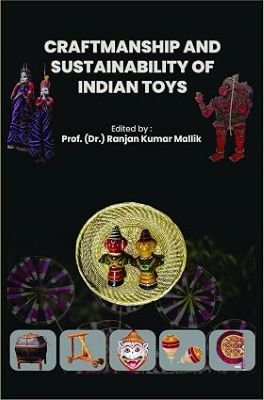
India is the land of arts and crafts. Almost every region has its traditional form of art that includes drawings, paintings, embroideries, carvings, saris, indigenous toys, and more. We're really blessed to be born in a country with so much diversity in this space. Sadly, however, some of these art forms, especially toy forms are on the verge of extinction.
The tradition of making toys in the Indian subcontinent dates back 5000 years to the Indus Valley Civilization. The excavated toys and dolls found in Harappa and Mohenjo-Daro included small carts. dancing women, etc. These simple playthings evolved into what they are today. Toys and games were not only meant to keep children entertained, but also to teach them how to develop their minds and understand what life had in store for them. Unlike the fancy and expensive toys sold in stores today, traditional Indian toys and games were simple and took their inspiration from nature. They were designed on the basis of how a child would react to them and how it would apply to real life.
India has a rich culture of storytelling through its toys. Our ancestors have been preserving this culture by making toys which show a perspective of life. The religious influence also led to a different set of toys depicting stories from epics like Ramayana and Mahabharata. It is a wonderful concept and may enthuse young generation to these destinations to witness the Toy-making.
Over the ages, toys have been made with clay, terracotta, cloth, and wood; later on, paper and other materials were used. Recently, our Honorable Prime Minister, Mr. Narendra Modi, called upon the country to become a global toy hub and stressed the need to become vocal for local toys.'
Almost anything can be a toy, and in India, the range of traditional materials and molds is immense Folk toy traditions include animals made from leather, figurines from terracotta, puppets from betel nut, and cloth Done right these remain some of the most eco-friendly toys possible. The materials were traditionally sourced locally, paints were natural dyes, most of these in the mainstream markets Sadly, brightly coloured plastic has replaced Where entire villages once flourished by as souvenirs or making such toys, now only small clusters survive, their toys sold as collectibles. From wooden kitchen sets that looked exactly like the mini version of our mom's kitchen and colourful dancing dolls that were a major attraction at melas to the spinning tops, called lattoos, this is what defined childhood for most of us.
Ajay Aggarwal, President, the Toy Association of India, says that the demand for Indian toys has increased in India since the lockdown. "There is a 5-10% increase because there has been a reduction in the import of toys from China, and kids were at home." Followed by Maharashtra, NCR is the biggest manufacturing hub of modernised Indian toys.
Toys are an important part of childhood, as they educate the child on basic physiological, mental, and emotional development. The activities and control that are required to understand and operate varying types of playthings instill in the child a sense of shape and colours, enhance cognitive ability, and flowers creativity.
However, toys may also serve as an important cultural asset. They tell stories of ancient lives and put on display the beliefs and traditions that exist among communities of people. They teach lessons and complete the mood and decor of a room.
