Culture Nature and Literature
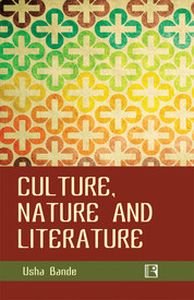
Contents: Preface. 1. Introduction. 2. Of parrots and Mynahs: reconstructing gender through folklore. 3. Re-mapping culture through literature: narratives as vehicles of culture. 4. Tagore's Chitra and folklore's Hidimba: power of the feminine. 5. Humour as resistance: the female voice in folklore. 6. The con textual contours: a study of four short stories. 7. The primordial and the modern: snake and night of the scorpion. 8. Gauri myth and reality. 9. Culture literature and human rights: a view from Indian fiction. 10. Can we exonerate Balram Halwai....
This book is a collection of papers written for and read at various seminars and conferences over the years. That explains the range of topics and themes from culture to ecology, from mythology to feminism and from terrorism to human rights. The essays also represent a variety of critical positions and constitute a re-examination of some of the central issues in Indian literature. The defining feature of Indian writing is the quest to specify a space of cultural identity outside the hegemony. Thus, the need to preserve and project a distinct cultural identity has always been accompanied by the simultaneous incorporation or rejection of a colonizing alterity.
Most of the papers contained in the volume, therefore, attempt to look at and understand culture from various angles. The purpose here is twofold: to make available researchers some new strands to critically view Indian writing and to analyse specific issues concentrating on textual and historical evidence. Many of the papers are linked by an interest in gender issues, although few address feminism directly. A few others offer a commentary on aspects of life across postmodern landscape but do not address postmodern theory as such. Those that have their origin in colonial and postcolonial situations do not dwell on the positive or negative attributes of that period. The book thus deals with culture, literature and nature to examine the central sites of their representation. The works explored here are not homogenous in that they belong to different sections of contemporary Indian society but this pluralism is indicative of the basic nature of literary criticism.
