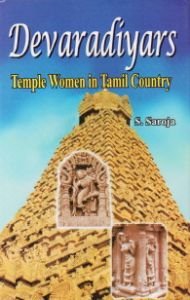
Devaradiyars : Temple Women in Tamil Country
Contents: Introduction. 1. Women in ancient and medieval literature. 2. Temple women in ancient inscriptions. 3. Temple women in medieval inscriptions. 4. Categories of temple women. 5. Women as donatrix. 6. Involvement of women in temple activities. 7. Status and privileges enjoyed by temple women. 8. Contribution of temple women to Tamil culture. 9. Study of personal names of women including temple women. Conclusion. Bibliography.
This subject has been delt with by many scholars in different angles. Dr. Lesslie C. Orr had made an analytical approach based on Chola inscriptions. However additional information is available in the records of the Pallava period, Kadavaraya chiefs, Pandyas, Kongucholas etc. The earliest reference to devaradiyar comes from a 9th century inscription. This has been interpreted as meaning courtesans but she is referred to as the builder of a Jaina Temple (sulaigal seivitta Devakulam). This is a concrete evidence to show that women were connected with the temple activities. In this book, some of the terms like Devanarmagal, Nakkan, Manikkam, Talaikoli. Koyil Pillaigal, Polladapillaigal, etc. have been explained.
Talichieri Pendugal-inscription of Rajaraja 1 (1014 A.D.) contains the names of 402 dancing girls. Study of personal names of temple women indicate the connection of the temple women with places affiliated to the deities of the places.
With the help of the epigraphical study an attempt has been made to reconstruct the temple women\'s history and their role in the evolution of the institution and ideologies of medieval Tamil society. (jacket)
This subject has been delt with by many scholars in different angles. Dr. Lesslie C. Orr had made an analytical approach based on Chola inscriptions. However additional information is available in the records of the Pallava period, Kadavaraya chiefs, Pandyas, Kongucholas etc. The earliest reference to devaradiyar comes from a 9th century inscription. This has been interpreted as meaning courtesans but she is referred to as the builder of a Jaina Temple (sulaigal seivitta Devakulam). This is a concrete evidence to show that women were connected with the temple activities. In this book, some of the terms like Devanarmagal, Nakkan, Manikkam, Talaikoli. Koyil Pillaigal, Polladapillaigal, etc. have been explained.
Talichieri Pendugal-inscription of Rajaraja 1 (1014 A.D.) contains the names of 402 dancing girls. Study of personal names of temple women indicate the connection of the temple women with places affiliated to the deities of the places.
With the help of the epigraphical study an attempt has been made to reconstruct the temple women\'s history and their role in the evolution of the institution and ideologies of medieval Tamil society. (jacket)
