Dilli Meri Dilli: Before and After 1998
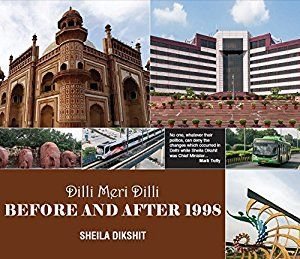
Delhi is actually many cities—the capital of the Pandavas in the epic age, seat of power of the Jat rulers, the capital of five different dynasties during the Delhi Sultanate, the Mughals, the Suris, the British Raj and, finally, the Republic of India. With every new set of rulers, the cultural tones of the city have changed too language, literature, lifestyle, political discourse, everything. In the face of each big change, Delhi has reinvented itself. There is hardly a city anywhere in the world that lives amidst such runes and relics of the past. In whichever direction you look-Chandni Chowk, Ballimaran, Daryaganj, Feroz Shah Kotla, Nizamuddin Mehrauli, Qutb Minar, Tughlaqabad almost every structure seems to be saying something about the city’s antiquity. Expectedly, a lot has been written about Delhi the vignettes of its past, and the many facets of its culture. Broadly, Delhi is divided into major phases-pre-Mughal, Mughal, British, Nehruvian and so on. At the turn of the 20th century, a whole new city emerged, quietly but distinctly, primarily as a response to the 1991 reforms and mind-boggling technological breakthroughs. The city built over the decades since Independence could not cope with the pressure of modernity and the demand for pace and connectivity. Overcrowded DTC buses, chaotic hospital wards, inadequate facilities at the airport, cramped classrooms, long power cuts-Delhi was gasping. It was badly in need of renewal. The reconstruction process began from the early years of the 21st century. Scores of innovatively designed flyovers, underpasses, multi-lane roads, bypasses, new universities, technical institutions, well-equipped hospitals, cultural centres, festivals a swanky and fabulously renovated airport, more hostels for working women a whole new city came up in a matter of 15 years. Delhi got connected to the world in every sense. This phase in the city’s life is synonymous with Sheila Dikshit’s long tenure as Chief Minister of Delhi. In this book, Dikshit looks at Delhi not as the Chief Minister who made important contributions, but as someone who has lived the city. Raised in Delhi, she has been part of its life, like any other ordinary resident, affected by every change in the cityscape. This is not a record of her achievement as a long-time Chief Minister, but a testament to her abiding affair with the city. (jacket)
