Early North India and Its Coinage (3rd c. BCE-3rd c. CE)
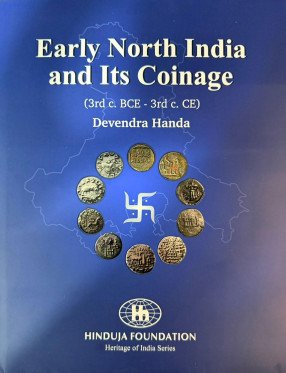
The book explores the rich and vast history of Early North Indian coins, offering a glimpse into the country’s fascinating past. Shri Devendra Handa’s Early North India and Its Coinage (3rd Century BCE–3rd Century CE) represents a milestone in Indian numismatic studies. The book, along with its Hindi translation (translated by Shri Manish Verma, Curator, Hinduja Foundation Antiquities Collection) is the first comprehensive and illustrated work to discuss the largest assemblage of early indigenous historical coins from North India. Covering the period from the 3rd century BCE to the 3rd century CE, it explores the political, economic, cultural, and artistic dimensions of early Indian coinage with exceptional depth and precision.
The book systematically surveys the coinage of numerous republics, tribal polities, and monarchies across northern India, including regions of the Ganga–Yamuna Doab, Bahlika, Punjab, Haryana, Himachal Pradesh, Rajasthan, and Uttarakhand.
Rulers of Ganga–Yamuna Doab: Mathura, a significant centre of political and cultural activity, receives detailed attention. The author discusses the Mitra and Datta dynasties, whose rulers—such as Gomitra, Brahmamitra, and Suryamitra—issued coins featuring Goddess Lakshmi, the Mathura tree, Srivatsa, Ujjain, and river symbols. Of particular note is a coin of Gomitra depicting the earliest known halo around the goddess’s head, an iconographic innovation later seen in Indian art. Kaushambi Region: Handa presents coins with both known and newly discovered inscriptions, highlighting the region’s numismatic diversity. The rulers Brihaspatimitra II, Radhamitra, Pothamitra, Jethamitra, Agnimitra, Varunamitra, Asvaghosha, and Sarpamitra are among those discussed. Their coins exhibit a range of motifs, demonstrating the political vitality and economic integration of Kaushambi. Panchala Kingdom: A major contribution of the book lies in its expanded documentation of Panchala coinage. While John Allan (1936) listed only twelve rulers, Handa identifies and illustrates over forty ruler’s coins, including Damagupta, Vangapala, Vrishabhamitra, Vishvapala, Pushyamitra, Pushyasena, Chandramitra, Indramitra, Revatimitra, Vijayamitra, and several newly recorded rulers such as Prithvimitra and Yagyamitra.
This extensive catalogue substantially enriches our understanding of Panchala’s political history and chronology.
Other Regional Coinages:
The book also explores the numismatic traditions of:
Bahlika region: Coins of the Bahlika, Savitriputra, and Madra tribes, mentioned in the Mahabharata.
Himachal Pradesh: Coinage of the Audumbaras, Trigartas, Kuluts, Kunindas, and Vemakis, reflecting a vibrant local economy.
Punjab and Haryana: Coins of the Mitra, Rajanya, and Vrishni groups, and coins’ discoveries from sites like Theh Polar and King Karna ka Qila.
Rajasthan: Issues of the Aarjunayanas, Kshudrakas, Uddehikas, Malavas, and Sibis, showing the region’s republican diversity.
Coins from Uttarakhand (Devadhara): Almora and local Garhwal rulers.
It is a must-have addition to any numismatic library, students, researchers and coin collectors.
