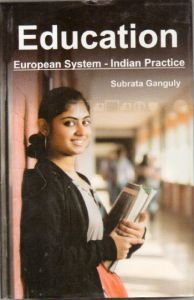
Education : European System Indian Practice
Contents: Preface. 1. The commencement. 2. Evolvement in prehistoric time. 3. Ancient records. 4. Greek philosophers the birth of science. 5. The sophists. 6. Socrates. 7. Plato. 8. Aristotle. 9. Education in ancient Greece. 10. Education in the Hellenic era. 11. Education in the Roman empire. 12. Jesus and Christianity. 13. The Christian empire. 14. Divergence in belief. 15. Expanding of Christianity. 16. Renaissance. 17. The performance and education of Music in Europe. 18. The school system in the middle ages. 19. Reformation and counter reformation. 20. Notable pedagogic conceptions in Baroque time. 21. The age of englihtenment. 22. Nature and environment in primary education. 23. The epochs of middle Europe. 24. Colony and education. 25. The great controversy. 26. William Campbell. 27. Literacy and education. 28. Translation and education. 29. History and education. 30. Nation and education. 31. Democracy and education. 32. Travelling and education. 33. Sports and education. 34. National language and official language. 35. Language debate and policy in India. 36. Some remarkable observations. 37. Anglo-Indian Democracy. 38. Pedagogy. 39. Primary education. 40. Professional training. Conclusion. Bibliography.
The book is based on the author’s own experience of the education systems in India and Germany, where a close connection between the theoretical learning and the practical world exists, whereas this relation is very poor in India and education is often reduced to learning by heart merely for a successful examination. Since the 18th century wise Indians realized the necessity of European education as a remedy for the defects in Indian schooling systems.
The European education system aims to create responsible-minded citizens through mass education. The English education however was introduced in India in the 19th century exclusively for administrative purposes and to create the required servants, who would be Indians in blood and colour but English in mind, at the cost of losing their mother tongue and identity. Modern India after Independence failed to adapt the foreign education system to her own needs but emphatically copied it with no regards to cultural identity.
The book brings examples how the English education system is practiced in India and is not accepted by the vast majority of the population, moreover only a few rich and influential families can easily afford it other middle class parents must invest their total earnings for their children, while the rest of the people are deprived of proper education. Therefore India needs a truly authentic Indian education system, which gains respects equally from all people. The book presents possibilities how the European education ideas could be adapted to India. (jacket)
