Education of the Tribal Children : Constraints and Strategies
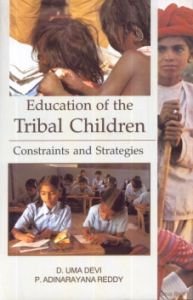
Contents: Preface. 1. Introduction. 2. Profile of the Village. 3. Status of the Schools in the sample Villages. 4. Profile of the Sample. 5. Functioning of the Schools. 6. Opinions of the Stakeholders regarding Education of the tribal children. 7. Utilization of the incentives. 8. Problems of the tribal children in attending the school. 9. Suggestions of the stakeholders. 10. Summary and recommendations. Bibliography. Appendices. Index.
The Scheduled Tribe population constitutes about 8 per cent to the total population. They live in forests, hills, hillocks and naturally isolated areas which made them geographically isolated, economically weak, socially and educationally deprived and far away to enjoy the fruits of development programmes, yet they are rich in cultural aspects and behaviorally simple and trustworthy. Due to their isolated way of living, traditions, beliefs, inaccessibility to modernization and developmental programmes etc., are lagging behind in all spheres of life including education. In order to develop them, the Government has taken several initiatives through constitutional provisions, implementation of the developmental and welfare programmes. Furthermore, the Government has launched several schemes and incentives for promoting education among the tribes and relaxed norms for establishing schools at their habitations. In-spite of all these efforts, it is found that literacy rate (47.10%) and educational participation is still low. Hence, there is a need to identify the specific problems and also the opinions of all the stakeholders in enrollment, retention and transition in the formal stream of education. The present book throws light on some of these problems and strategies to overcome the problems.
The book will be useful for the researchers, students, administrators and policymakers to pursue their work in the field of development of scheduled tribes with special reference to the formal education. (Jacket)
