Electronic Warfare : War in the Front Dimension
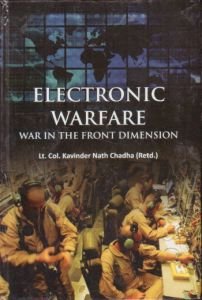
Contents: Preface. 1. Introduction. 2. Applications of electronic warfare. 3. Electronic warfare support to Military operations. 4. Digital warfare. 5. Cyber-terrorism: the emerging threat. 6. Intelligence for cyberspace warfare. 7. Information warfare. 8. Network-centric warfare. Bibliography. Index.
Electronic warfare uses focused energy, usually radio waves or laser light to confuse or disable an enemy’s electronics. It can also involve listening—collecting an enemy’s radio signals or sensing the radar of an incoming missile. Raytheon has been a leader in electronic warfare since World War II, when it developed a magnetron, or radio wave generator, that became a key part of the Allies radar systems. In recent years it has pioneered the use of gallium nitride, a substance that produces five times more radio energy than previous technologies. Today the company is developing tactical lasers, the Next Generation Jammer and other weapons, along with electrical system capable of powering whatever innovations the future holds. Electronic warfare (EW) is any action involving the use of the electromagnetic spectrum or directed energy to control the spectrum, attack an enemy, or impede enemy assaults via the spectrum. The purpose of electronic warfare is to deny the opponent the advantage of and ensure friendly unimpeded access to the EM spectrum. EW can be applied from air, sea, land, and space by manned and unmanned systems, and can target humans, communications, radar, or other assets.
