Elements of Laser Ranging Techniques
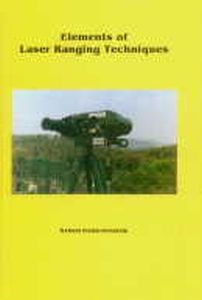
Contents: Preface. I. Fundamentals of light : 1. Earlier history on theory of light. 2. Lorentz theory of light source. 3. Quantum theory of light. 4. Bohr’s hypothesis. 5. Matter waves. 6. Boltzman statistics. 7. Interaction of radiation with matter. 8. The development of laser. 9. Properties of laser beam. 10. Atomic line shape function. 11. Elementary consideration regarding laser action. II. Propagation of laser beam in atmosphere : 1. Introduction. 2. Atmospheric composition and structure. 3. Particles in the atmosphere. 4. Fog, cloud and rain. 5. Absorption of laser beam. 6. Absorption spectroscopy of atmospheric gases. 7. Scattering of laser beam. 8. Transmission of light through haze, fog, clouds and rain. 9. Random refraction. 10. Dispersion. III. Type of laser sources : 1. Introduction. 2. Requirements of laser source for ranging purpose. 3. Solid state laser sources. 4. Gas laser sources. 5. Semiconductors. 6. Semiconductor lasers. 7. Hetero-structure lasers. IV. Optical resonators : 1. Introduction. 2. Historical background. 3. Resonator modes. 4. Fundamental mode – Gaussian beam. 5. Resonators configurations. 6. Resonators with mirrors having Gaussian wave – front curvature. 7. Diffraction losses. 8. Active resonators. 9. Longitudinal modes – single frequency operation of laser. 10. Single axial mode operation – linewidth. V. Laser pumping : 1. Introduction. 2. Pump source for solid state lasers. 3. Xenon / Krypton discharge lamps. 4. Semiconductor quantum well diode lasers. 5. Excitation / pumping of gaseous lasers. 6. Excitation / pumping of semiconductor lasers. VI. Q-switching techniques : 1. Introduction. 2. Theory. VII. Electronics : 1. Introduction. 2. Laser power supply. 3. Pulse driving circuit for GaAs laser. 4. Trigger circuit. 5. Radio-frequency oscillator. 6. Q-switching circuit. 7. Range measuring circuit. 8. Distance measurement. 9. Low light level detection circuit. 10. Safety circuits. VIII. Optics & Thin films : 1. Introduction. 2. Optical computation. 3. Optics technology. 4. Specification of critical components. 5. Thin film technology. IX. Low – level detection : 1. Historical background. 2. Introduction. 3. Terminology. 4. The Photomultiplier Tubes (PMT). 5. Photoelectric effect – semiconductor. 6. Mercury Cadmium Telluride (MCT) detectors. X. Laser ranging systems : 1. Introduction. 2. The basic principal. 3. Range equation. 4. Laser receiver. 5. Description. 6. Laser range finders. 7. Collimation and aligning procedure. 8. Testing of laser range finder. 9. Maintenance procedure. 10. Range finder operation. XI. Recent developments in laser ranging techniques : 1. Introduction. 2. Ranging & sighting with range gated laser illumination. 3. Laser range finder with coded double pulse. 4. Microwave modulated optical radar. 5. Devices & component of future ranging techniques. 6. Conclusion. XII. Laser safety : 1. Introduction. 2. Structure and function of eye. 3. Energy of lasers for ranging. 4. Laser beam standards & safety guidelines. 5. Laser classification & system requirements. 6. Maximum Permissible Exposure (MPE) & hazardous range. 7. Cryogenic hazards. 8. Electric hazards. 9. Do’s and dont’s. 10. Laser safety officers responsibilities. Summary. References.
