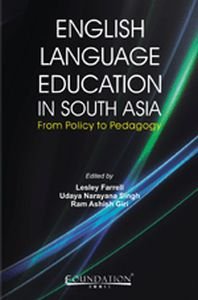
English Language Education in South Asia : From Policy to Pedagogy
Contents: Foreword. Contributors. Introduction. Section 1: Policy: 1: English education in South Asia: the Challenges of Globalisation. 2: The changing Global-Local Linguistic Landscape in India. 3: A friendly Knife? English in the Context of Sri Lankan Language Planning. 4: Policy Documents on English in India and their Implications. 5: The Making of Nepal’s Language Policy: Importation of Ideologies. 6: Bhutan’s Language Policy: Where Does English Stand? 7: Ways Forward: State of EFL Affairs in the Afghans …Section 2: Pedagogy: 8: The Theory, Practice and Pedagogy of English as a Foreign Language in Nepal. 9: Filling a Training Gap: Combining English Language … 10: Teacher Training and Teaching Practice: The Changing Landscape of ELT.… 11: ELT Professional Associations: Their Changing Roles and Responsibilities. 12: The Role of ELT Professional Associations in South Asia: A Case. 13: Promoting ELE in Nepal: The NELTA Way. 14: Project-based Learning to Facilitate Learner Autonomy. 15:Testing Oral Skill Competence in the School Leaving Certificate Examination in Nepal … Section 3: Politics of Pedagogy: 16: English as Linguistic Capital in a Globalising World… 17: The Teaching of English in India: A Narrative of Nation Making. 18: ELE Policy and Pedagogy in India: A Study of the Curriculum Framework … Epilogue. Appendices.
In South Asia, English is the major link language for people from diverse linguistic backgrounds. With globalisation and the subsequent rise in the demand of English, almost all South Asian countries are in the process of introducing English at the early school level. This widens the scope of investigating into the national policies regarding English and probing the status of English language in relation to pedagogy in the countries of the South Asian region.
English Language Education in South Asia provides a strong foundation for scholarly work on ELE in South Asia. The volume contains compilation of scholarly and investigative essays, especially written for this volume, by some of the most prominent and emerging scholars of English language education in South Asia. The s provide up-to-date information on the politics, policy, theory and practice of ELE in seven countries of South Asia - Afghanistan, Bangladesh, Bhutan, India, Nepal, Pakistan and Sri Lanka. The volume, divided into three sections - Policy, Pedagogy and Politics of Pedagogy - investigates how the socio-economic, local and global language politics shape the ELE in South Asia. It also addresses the theoretical as well as practical issues of classroom procedures, teacher preparation programmes, resource management, examinations, educational constraints and limitations.
