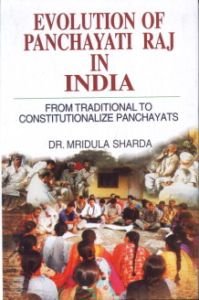
Evolution of Panchayati Raj in India: From Traditional to Constitutionalize Panchayats
Contents: Preface. Introduction. 1. Status of local bodies in ancient India. 2. Panchayats in medieval India. 3. Status of rural local bodies during British Raj. 4. Development of the Panchyat Raj and the National Movement. 5. Ideas of Gandhi, Nehru and Jaya Prakash Narayan about Panchayati Raj. 6. Evolution of Panchayati Raj in India (1947-77). 7. Revival of Panchayati Raj and Introduction of 73rd Amendment. 8. Right of Self Governance to Scheduled Tribes and Panchayats Extension to scheduled Areas (PESA) Act 1996. 9. New Panchayati Raj System and its Implications. 10. Developments of new Panchayati Raj (NPR) after Seventy Third Amendment. 11. Strategy for Strengthening the Grassroots Democracy. Bibliography. Index.
Present work deals with an important aspect of Indian politics that is the Panchayati Raj Institutions. Since Vedic times these were the most stable institutions in the field of governance. The institutions had organic unity and they served the masses on the bases of principles of good governance. This system of governance remained in practice till the Britishers came to India. Before Britishers during the medieval period Muslim rulers added the institution of Mugaddam, Patwari, Jagirdar, Mansabdar in the rural administration but the indigenous system of panchayati raj survived as an important institution in the governance. Britishers for their own interest damaged these institutions. Gradually they lost their vigour and vitality which they failed to revive after independence. Government made some efforts at union and states level but outcome was not effective. Finally 73rd Amendment passed in 1993 gave PRI’s a constitutional backing like that of the Parliament and State legislature. Besides the constitutional status the PRI’s after fifteen years of 73rd Amendment are not able to gain the status, as the institutions of people’s participation. The main reason behind these developments is our social-cultural ecology in which the traditional institutions are still dominating. (Jacket)
