Fishery Ecosystem Dynamics
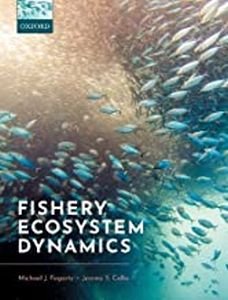
Contents: 1:Introduction.Ecological Models: an overview. 2:Density-Independent Population Growth. 3:Density-Dependent Population Growth. 4:Interspecific Interactions I: Predation and Parasitism.5:Interspecific Interactions II: Competition and Mutualism. 6:Community Dynamics. 7:Spatial Processes. Ecological Production. 8:Production at the Individual Level. 9:Production at the Cohort and Population Levels. 10:Production at the Ecosystem Level. Harvesting Models and Strategies. 11:Harvesting at the Cohort and Population Levels. 12:Harvesting at the Community Level. 13:Harvesting at the Ecosystem Level. 14:Empirical Dynamic Modeling. 15:Towards EBFM.
Fisheries supply a critically important ecosystem service by providing over three billion people with nearly 20% of their daily animal protein intake. Yet one third of the world's fish stocks are currently harvested at unsustainable levels. Calls for the adoption of more holistic approaches to management that incorporate broader ecosystem principles are now being translated into action worldwide to meet this challenge. The transition from concept to implementation is accompanied by the need to further establish and evaluate the analytical framework for Ecosystem-Based Fishery Management (EBFM). The objectives of this novel textbook are to provide an introduction to this topic for the next generation of scientists who will carry on this work, to illuminate the deep and often underappreciated connections between basic ecology and fishery science, and to explore the implications of these linkages in formulating management strategies for the 21st century.
Fishery Ecosystem Dynamics will be of great use to graduate level students as well as academic researchers and professionals (both governmental and NGO) in the fields of fisheries ecology and management.
