Folk-Tempo: Selected Lore of the Indian People
Contents: 1. Folk tempo: Selected Lore of the Indian People - An Introduction. 2. Language and its impact on Indigenous–Tribal communities in India. 3. Kudukh Poetry: A Historical Perspective. 4. Sangam Lore. 5. Customary Law of Tribal People for Good Governance in Jharkhand. 6. Customary Laws of Lohra Tribe of Jharkhand. 7. The Oraon Tribe: Branch of Dravidian Society. 8. Role of Tribes in Forest Protection: Some Observation from Western Part of Odisha (Orissa). 9. History and Collection of Carpet in India. 10. The Role of Iconographic Terminology in Documentation of Indian Sculptures. 11. Dalit Consciousness: A New Trend of Indian writing in English. 12. A Comparative Study of Jeokbyeokga of Korea and Alha of India. 13. Formation of the Canon: The Tamil Literary Tradition and Landscape Narrative in Sangam Poetry. 14. Communicating Culture through Tribal Art: A Case Study of Sohrai and Kohvar Paintings in Jharkhand Khasi Humour: A Study. 15. Keepers of the Tradition- The Hajongs of Odalguri Moimonsingh Village. 16. Ojâ-pâli: A Performance of Assam, North East India. 17. From Folk Theatre to the Pedagogies of Teaching, Training and Practicing Theatre: A practitioner’s Perspective. 18. Perceptions of Tribal Ethos and tradition. 19. Folk Performance in the Age of New Media: A Study of Bappiriyan Theyyam. 20. Doyen Folklorist of North-East India: Padmashree Prof. Birendranath Datta.
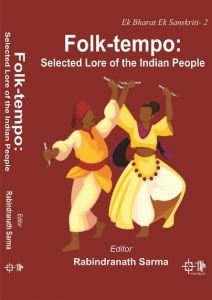
Folk-tempo: Selected Lore of the Indian People is the second book on Ek Bharat Ek Sanskriti series of Prof. Rabindranath Sarma. The book is a compilation of works of different pioneer scholars who are working on different genres of Culture in different parts of India. All works compiled in this volume was presented in different seminars/conferences. Contributors of this volume are working in different parts of India and presented their works in their own style. The book has been dedicated to doyen folklorist Padmashree Prof. Birendranath Datta.
This book will be helpful for students of Humanities and Social Sciences like Cultural Studies, Liberal Arts, Folklore, Anthropology, Sociology, Language & Literature, Tribal Studies, Political Science, History, Art & Aesthetics, Mass Communication, Performance Studies etc. Students who are planning for the competitive examinations they must read this book for in-depth knowledge.
