Gramsci's Common Sense: Inequality and its Narratives
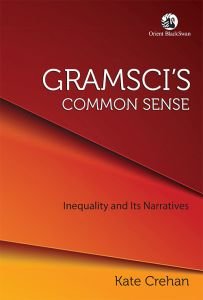
Contents: Preface. Part I. Subalternity, Intellectuals and Common Sense: 1. Subalternity. 2. Intellectuals. 3. Common Sense. 4. What Subalterns Know. Part II. Case Studies: 5. Adam Smith: A Bourgeois, Organic Intellectual? 6. The Common Sense of the Tea Party. 7. Common Sense, Good Sense and Occupy. Conclusion: Reading Gramsci in the Twenty-First Century. Bibliography. Index.
Acknowledged as one of the classics of twentieth-century Marxism, Antonio Gramsci’s Prison Notebooks provides an approach to class that extends beyond economic inequality to include other forms of inequality, such as those of race, gender, sexual orientation and religion.
The author, Kate Crehan explains the understanding of inequality in Prison Notebooks, focusing in particular on Gramsci’s interrelated concepts of subalternity, intellectuals, and common sense and putting them in relation to the work of thinkers such as Bourdieu, Arendt, Spivak and Said.
The Gramscian concepts are clarified through case studies; for example, the idea of the organic individual is explained through a study of Adam Smith’s work, and Gramsci’s understanding of common sense is clarified through examining the political narratives associated with the Tea Party and Occupy Wall Street movements in the U.S.
Gramsci’s Common Sense provides an accessible and useful introduction to a key Marxist thinker whose writings throw light on the twenty-first century’s increasing inequality.
It will be invaluable for students and scholars of from a wide range of disciplines, including anthropology, sociology, political science, history, geography and literary studies.
