Handbook of Energy Efficiency for Industry
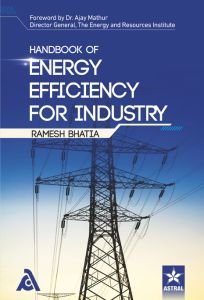
Contents: Foreword. Preface. 1. Energy Efficiency in Industrial Utilities. 2. Distribution of Electricity in the Plant. 3. Efficient Running of Motors. 4. Operational Efficiency of Pumps. 5. Compressed Air System. 6. Boilers and Steam Distribution. 7. Efficiency of Fans and Blowers. 8. Transformers and Their Efficiency. 9. Refrigeration and Air Conditioning Efficiency. 10. Cooling Towers. 11. Fuels and Combustion Efficiency. 12. Harmonics and Power Quality. 13. Efficiency of Secondary Generation. 14. Furnaces and Refractories. 15. Auxiliary Power Consumption in Large Boilers. 16. Waste Heat Recovery in Industries. 17. Renewables and Environment. 18. Energy Efficiency in Industrial Buildings. 19. Energy Monitoring, Energy Balance and Practising ISO 50001. 20. Initiation of Energy Efficiency in Plant Utilities.
Energy efficiency for industry involves a vast spectrum as varied as the industry itself. This book focuses on the utilities in industries which narrows down the coverage to a finite area. Here the concentration is on industrial utilities such as boilers, air compressors, motors etc which support all industries even though the industries have different processes and manufacturing lines.
There are 12 to 15 utilities commonly used in all industries and these consume a large proportion of energy. While the processes in each industry are more complex and require a high degree of intricate knowledge before any improvement is undertaken in the process, the utilities can be approached more easily for the purpose of energy efficiency. Processes may have some uniqueness but the utilities have more commonality with other industries.
This book is based on ‘hands on’ experience of visiting almost all major industries in the country for the purpose of selling the concept of energy conservation and energy efficiency in their industry followed by sale of software systems, sensors and monitoring equipment. For this purpose, many presentations were made in the locations of the industries and with content specifically applicable to them.
As energy costs in manufacturing form a large component of total production costs, energy efficiency concepts find a very receptive audience across the industries and across the hierarchy in every industry. Consequently, all industries and people comprising management, engineers and operators will find useful information in the book which they can consider practical and put it to use in their work.
In the book, each utility has been assigned a chapter. Thus if an engineer needs to improve energy efficiency of an air compressor he can obtain all the steps required for achieving his objective. (jacket)
