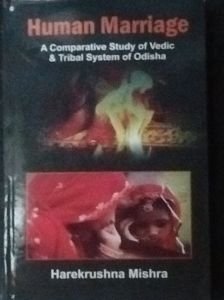
Human Marriage: A Comparative Study of Vedic and Tribal Systems of Odisha
Contents: Preface. 1. Concept and context. 2. Marriage rites in Vedic texts: an estimation. 3. Pre-requisites of a marriage. 4. Forms of marriage: comprehensive analysis. 5. Marriage rites: commencement to conclusion. Bibliography.
In Indian tradition several words have been used to convey the idea of marriage indicating one or more of the elements of the Sanskara of marriage as Udvaha, which signifies the meaning that taking the girl out of her parental home, again supplemented by the word Vivaha which indicates the idea that taking the girl away in a special way for a special purpose.
India having the character of a subcontinent has basically two types of habitation i.e. the forest dwellers and the plain dwellers. When one group stays in forest and hilly region, the other group used to dwell in the riverbank which was more convenient for transportation of essential livelihood and culture as well.
The dwellers in plan and the valleys are identified as the Vedic residents as they chiefly guided by the Vedic religion and culture which is scriptural in nature. The people living in the mountainous and forest regions are the tribal residents.
This study is an attempt to find out the cultural proximity of both the civilisations. The tribal people are not completely untouched by the Vedic tradition as it is generally viewed. Attitude towards life, more to say married life is the common stand point on the basis of which both Vedic and Tribal people have got much similar inherent ideals and mottos. (jacket)
