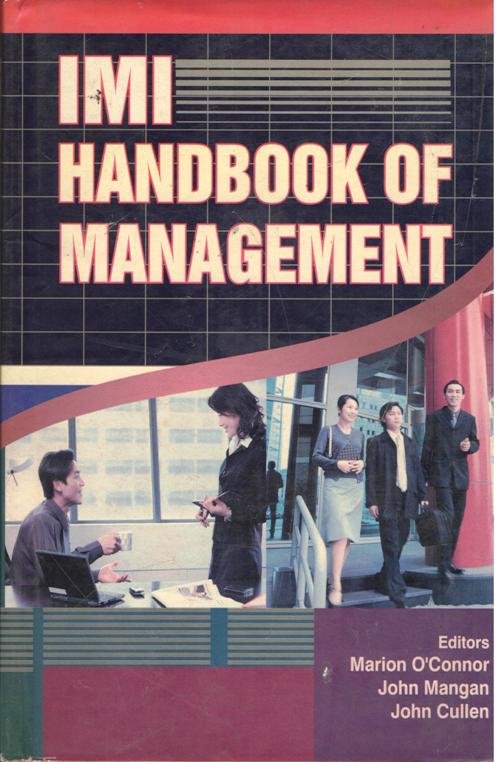
IMI Handbook of Management
Contents: Preface. Introduction. I. Managing Yourself and Your Carrier: 1. Managing your time. 2. Getting things done. 3. Managing stress and your health. 4. Planning your carrier. II. Managing Your Staff and Customers: 5. Motivating others. 6. Building effective teams. 7. Negotiating effectively. 8. Facilitating meetings and chairing discussions. 9. Managing people. 10. Managing the customer. III. Managing Communications: 11. Presentation and communication skills. 12. Internal communications. 13. Assertiveness. 14. Influencing others. 15. Gathering business information. 16. Business writing. IV. Managing Forward: 17. Managing in changing times. 18. Managing outsourcing. 19. Doing business strategy. 20. Leadership. Index.
"The objective of the IMI Handbook of Management is quite straightforward: to help good managers become even better. Management is neither a science nor an art, but rather a combination of these two domains and a role which, of necessity, draws upon a range of diverse skills, abilities and intelligences.
The handbook draws together contributions from IMI faculty, covering 20 different aspects of management. The individual authors are all engaged on daily basis in the development of practising managers and this grounded, real-world orientation is evident in the focus of each contribution on the practical execution of the topic covered.
Part I covers you and your career - topics covered include: effective management of your time, getting things done, career planning and managing stress and your health. Part II switches to managing others topics covered include: team-building, facilitation others, motivating others, negotiating effectively, facilitating discussions and meetings, people management (HRM) and customer management (marketing). Communicating effectively is central to being a good manager and is the subject of Part III - topics covered include: presentation and communications skills, communicating internally within the organisation, asserting yourself and influencing skills, as well as gathering business information and report writing. Part IV of the handbook turns to managing forward - topics covered include how to manage during times of change, managing outsourcing strategic planning and becoming a leader. Each chapter offers both a chance to revisits knowledge previously acquired, but perhaps forgotten or neglected, as well as to acquire up-to-date, new and valuable information." (jacket)
