India and the Rights of Indigenous Peoples
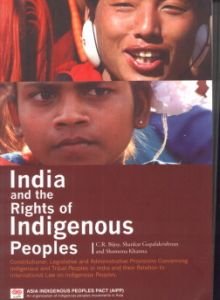
Contents: Foreword. Executive summary. I. Introduction to India\'s indigenous peoples and its legal system: 1. Indigenous peoples in India. 2. Brief history. 3. Status of scheduled tribes. 4. Legal and policy frameworks. II. Legal protection of indigenous peoples in India: 1. Recognition and identification. 2. Non-discrimination. 3. Self-management. 4. Access to justice. 5. Culture and language rights. 6. Education. III. Conclusion and recommendations. Case Studies: I. The Indian constitution, law and the Nagas: a case study of Nagaland: 1. Background. 2. Legal status. 3. Conclusion. II. The Indian constitution, law and the Adivasis: a case study of Jharkhand: 1. Background. 2. Legal status. 3. Conclusion. 4. Annexure.
From the foreword: This study forms part of an Asia-wide research initiative by ILO and AIPP which seeks to examine the extent to which the legal frameworks of key Asian countries impact on, and protect the rights of, indigenous and tribal peoples. It is hoped that this work, in addition to increasing awareness on this important issue, will contribute in the long run to the development and implementation of enabling policy and legal frameworks for the protection of the rights of these groups, who remain among the most marginalised and vulnerable in all countries where they live.
Experience from across the world has shown that sustained denial of indigenous peoples rights leads to conflict and instability, which impacts severely on national development. India is no different. Concrete and sincere measures, as well as new approaches, are needed in order to uphold the social cultural, economic and political integrity of India\'s scheduled tribes and to prevent their further alimentation from the state. Such action would also go a long way in terms of ensuring equitable and sustainable development for the nation as a whole.
From the foreword: This study forms part of an Asia-wide research initiative by ILO and AIPP which seeks to examine the extent to which the legal frameworks of key Asian countries impact on, and protect the rights of, indigenous and tribal peoples. It is hoped that this work, in addition to increasing awareness on this important issue, will contribute in the long run to the development and implementation of enabling policy and legal frameworks for the protection of the rights of these groups, who remain among the most marginalised and vulnerable in all countries where they live.
Experience from across the world has shown that sustained denial of indigenous peoples rights leads to conflict and instability, which impacts severely on national development. India is no different. Concrete and sincere measures, as well as new approaches, are needed in order to uphold the social cultural, economic and political integrity of India\'s scheduled tribes and to prevent their further alimentation from the state. Such action would also go a long way in terms of ensuring equitable and sustainable development for the nation as a whole.
