Indian Government and Politics, Vols. I to IV
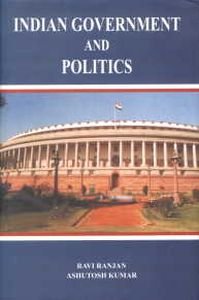
Contents: Vol. I. Preface. 1. The Constitution of India. 2. The Union. 3. The states. 4. The Union territories. 5. The Panchayats. 6. The municipalities. 7. The Scheduled and Tribal areas. 8. Relations between the union and the states. 9. Finance, property, contracts and suits. 10. Trade, commerce and intercourse within the territory of India. 11. Services under the Union and the states. 12. Tribunals. 13. Elections. 14. Special provisions relating to certain classes. 15. Official language. 16. Emergency provisions. 17. Miscellaneous. 18. Amendment of the constitution. 19. Temporary, transitional and special provisions. 20. Short title, commencement, authoritative text in Hindi and repeals. Bibliography. Index.
Vol. II. Preface. 1. The constitution (Application to Jammu and Kashmir) order, 1954. 2. The exceptions and modifications to the state of Jammu and Kashmir. 3. Extracts from the constitution (Forty-fourth Amendment) Act, 1978. 4. The Constitution (Eighty-sixth Amendment) Act, 2002. 5. The Constitution (Eighty-eighth Amendment) Act, 2003. 6. Consequential and minor amendments and repeals in the constitution. Bibliography. Index.
Vol. III. Preface. 1. Indian National Movement. 2. Mahatma Gandhi the leader. 3. Making of the constitution and Constituent Assembly in India. 4. Salient features of the Indian Constitution. 5. Politics of Amendment in Indian Constitution. 6. Reviewing the Indian Constitution. 7. Fundamental rights vis-a-vis directive principles of state policy. 8. Union and state legislature and its functioning. 9. State executive. 10. Ministry of information and broadcasting. 11. Judicial set up in India. 12. Federalism-I. 23. Emergency provisions. Bibliography. Index.
Vol. IV. Preface. 1. Impact of centre-state relations on Indian politics. 2. Problems in centre-state relations. 3. Nature of party system in India. 4. State, regional, cast based political parties. 5. Election Commission and electoral reforms in India. 6. Politics of communalism and secularism in India. 7. Regionalism. 8. Democratic decentralisation-structure, pattern and trends. 9. Indian experience with democracy and development. Bibliography. Index.
"India is a unique example of federal polity in the world. Its strength lies in its socio-cultural composition. It is evident from multiple lines of variations and diversities. The presented book is the book of its own kind. It has been brought into being in view of incessant increasing demand from the students professors and scholars adhere to the subjects. The book has been published in four volumes consisting of Indian Constitution, federal polity, fundamental rights, directive principles, and diverse aspects of Indian Government etc. The book finds its comprehensive treatment about all the above enumerated facts. The way of expression and easy language really admiration." (jacket)
