Invisible Women, Visible Histories : Gender, Society and Polity in North India (Seventh to Twelfth Century AD)
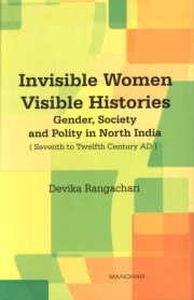
Contents: Acknowledgements. 1. Introduction. I. Kashmir: 2. Kashmir: a political framework (Seventh-Twelfth Century AD). 3. Kashmir : a gendered perspective (The Pre-Didda period--c. AD 600-958). 4. Kashmir : a gendered perspective (Didda\'s reign and the post-Didda period--AD980/1-1149/50). 5. Kashmir: Summary. II. Kanauj: 6. Kanauj: a political framework (Seventh-twelfth century AD). 7. Kanauj: a gendered perspective (Harsavardhana: aspects of polity, religion and literary production). 8. Kanauj: a gendered perspective (The reign of Yasovarman, the Pratiharas and the Gahadavalas). 9. Kanauj: summary. III. Bengal--Bihar: 10. Bengal--Bihar: political framework (Seventh-Twelfth Century AD). 11. Bengal-Bihar: a gendered perspective. 12. Bengal-Bihar: summary. 13. Conclusion. Bibliography. Index.
"This book examines certain gendered aspects of the early medieval period in North India (Between the seventh and Twelfth Centuries AD) through a study of prominent--but respective--regional kingdoms located in Kashmir, Kanauj and across Bengal and Bihar. By examining important epigraphic and literary sources pertaining to these polities in as comprehensive a manner as possible, it shows that gender is a cardinal angle from which to view this period and, additionally, that the same set of sources can yield differing interpretations. It also highlights the indifference of most secondary sources towards gender and related issues. The book, therefore, strives to address a lacuna in the historical reconstruction of the society and polity in this time-span.
Although early medieval Kashmir, Kanauj and Bengal-Bihar are linked by their status as important regional powers in this period and by their close political interactions, the book shows that the role and status of women differed considerably according to their regional contexts. The picture, therefore, is not a unified one, thereby stressing the fact that sweeping statements on women cannot be made to apply to early medieval North India as a whole--as has hitherto been the trend. The problems and possibilities involved in a gender analysis of this sort that examines the role and presence of women vis-à-vis men is highlighted, in the process. Areas with the potential for future investigation are also indicated. The pivotal importance of gender in any historical reconstruction of the early medieval period in North India is thereby underscored." (jacket)
