Literature for Children : A Reader
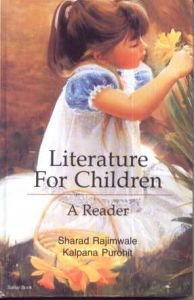
Contents: Preface. Acknowledgement. Contributors. 1. Rushdie’s Haroun and the Sea of Stories as a children’s book/Rama Kundu. 2. The Akela trilogy by Chaman Nahal/Shyam Samtani. 3. Ideology in children’s fiction: the discourse of pluralism in Sorry Best Friend/Mala Pandurang. 4. That singsong reservation accent: Sherman Alexie’s Young Adult Novel/Richard Sax. 5. Writing for children and writer’s responsibility/Sharad Rajimwale. 6. Literature for children: fables with a purpose/Kalpana Purohit. 7. Contemporary children’s literature: resurgence of experience from innocence/Anil K. Prasad. 8. An assessment of Margaret Atwood’s portrayal of childhood relationships in cat’s eye/M.R. Khatri. 9. Kunjunni master - The Little Master of Kerala/Devika M.P. 10. Values: the soul of education/Vijay Kumar Roy. 11. Children’s literature in India: genres, reading, education and the demands of the digital age/Manisha Sharma. 12. Shaping up of the mind and story-telling/Sunidhi Bissa. 13. Teenage wasteland: portrayal of women in young adult literature/Vibha Bhoot. 14. A survey of various topics in adolescent literature/Andrea G. Trivisonno. 15. The inimitable Ruskin Bond/Bandana Burman. 16. Portrayal of the child in Charles Dickens’s novels/Madhvika Mathur. 17. Literature of the west/Ritu Sharma. Index.
Children’s world is filled with fun and fantasy. In their growing lives the vitality of joy and laughter prepares them to face challenges of adult life by strengthening those foundations whose material is hope and positive world-view. It is with this belief that writers and artists have gone on fashioning a parallel world of images in which children can find greater freedom to discover how they can grapple and overcome those problems which in real life appeal formidable. Literature written for children introduces them to the meaning of compassion, inestimable strength and value of truth, honesty and self sacrifice and the golden doors that open out of difficult existence to a meaningful life. In this quintessential understanding can be found the great significance of timeless creations of Leo Tolstoy, Oscar Wilde, Hans Christian Andersen, James Barrie and numerous other writers.
Changing times have affected writings and other means of entertainment for children. Out of a welter of theories and influences children’s literature is emerging in a new avatar, somewhat different, with a new role and explanation for its being. This has also occasioned a fierce debate among scholars and common readers seeking to analyze new works that are being offered to children. Children’s literature has opened out a new field of research attracting inputs form experts in such diverse areas as sociology, psychology, linguistics and culture studies.
The present anthology offers a rich collection of opinions on a diversity of topics pertaining to writings for children. Written by scholars engaged in research in different areas, these papers not only provide insights into individual works and basic theoretical concerns but also stimulate further inquiry.
Children’s world is filled with fun and fantasy. In their growing lives the vitality of joy and laughter prepares them to face challenges of adult life by strengthening those foundations whose material is hope and positive world-view. It is with this belief that writers and artists have gone on fashioning a parallel world of images in which children can find greater freedom to discover how they can grapple and overcome those problems which in real life appeal formidable. Literature written for children introduces them to the meaning of compassion, inestimable strength and value of truth, honesty and self sacrifice and the golden doors that open out of difficult existence to a meaningful life. In this quintessential understanding can be found the great significance of timeless creations of Leo Tolstoy, Oscar Wilde, Hans Christian Andersen, James Barrie and numerous other writers.
Changing times have affected writings and other means of entertainment for children. Out of a welter of theories and influences children’s literature is emerging in a new avatar, somewhat different, with a new role and explanation for its being. This has also occasioned a fierce debate among scholars and common readers seeking to analyze new works that are being offered to children. Children’s literature has opened out a new field of research attracting inputs form experts in such diverse areas as sociology, psychology, linguistics and culture studies.
The present anthology offers a rich collection of opinions on a diversity of topics pertaining to writings for children. Written by scholars engaged in research in different areas, these papers not only provide insights into individual works and basic theoretical concerns but also stimulate further inquiry.
