Management of Major Disasters
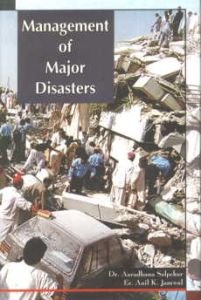
Contents: Preface. 1. Transforming adversity into opportunity: experiences from the Gujarat earthquake reconstruction programme. 2. Seismic rehabilitation of buildings. 3. Challenges of post-super cyclone reconstruction in Orissa. 4. Disaster mitigation in electricity sector. 5. Seismic evaluation and retrofit of existing multi-storeyed buildings. 6. Seismic performance evaluation and rehabilitation of precast concrete schoolrooms. 7. Structural safety issues in retrofitting of reinforced concrete buildings. 8. Arunachal Pradesh: a geo-dynamic quagmire amplified by human disregard to ecology--a case studyin disaster management. 9. Seismic hazard assessment for mitigating earthquake damage of California bridges. 10. Disasters and their management in Nepal. 11. Programme for enhancement of Emergency Response (PEER): an initiative towards self sufficiency in responding to large-scale disaster in Asias. 12. Reconstruction programmes in EQ effected areas--experiences in Latur and Bhuj. 13. Prevention of disaster due to open fires un underground coal mines--a model study. 14. Disaster management over Indian railways issues and challenges. 15. Food hazard management in England and Wales: from land drainage to flood risk management. 16. Policies and measures on flood mitigation in China since 1998. 17. Seismic risk in Bangladesh and its management. 18. Seismic vulnerability assessment of critical facilities and lifeline infrastructure of Kathmandu Valley, Nepal. 19. Management of manmade disasters--face to face with the Bhopal gas tragedy. 20. Design patterns in disaster mitigation of fire hazards from liquid fuel tank farms. 21. Collapse of bridges due to flash flood in Arunachal Pradesh. 22. Role of Vehicle mounted operation theatre complex and wards in disaster management. 23. Habitat, earthquake and reconstruction. 24. The EMI Cluster cities Project: reducing disasters in World\'s Largest Cities through international cooperation. 25. Multi-hazard mapping for planning urban centers in mountainous terrains. 26. An early warning system for improving resiliency of transport systems in urban areas during natural disasters. 27. Urban earthquake risk management in Nepal. 28. Emergency Dome construction housing system based on Anhydrite light Mortar. 29. Human settlements, emergency planning and lifeline structures in disaster--prone areas--specifically in hydro power projects. Bibliography. Index.
"On October 20, 1991, the earth shook violently and pulverized the might mountains of the Uttarkashi Region of the Garhwal Hills. Most settlements were turned into awesome rubble. Massive relief and rehabilitation programmes were launched by government as well as non-government agencies. But the absence of disaster mitigation and preparedness mechanism, back of basic information about the affected area; with respect to locally available constructional materials, indigenous technologies, climate and way of life were actually felt.
Various reconstruction approaches were experimented with, in which the agencies involved, using their own judgement or discretion, took up the reconstruction work. General ignorance, and a lack of preparedness at all levels, political, administrative, professional and private, and the resultant chaos and confusion were clearly evident. A leading specialist had observed that Uttarkashi was a colossal failure at all levels.
This book will be of immense help to all these contemplating to acquire an expert knowledge of he management strategies for mitigating he disastrous effects of major hazards in India as well as in the neighbouring countries."
