Medieval History Of Sudhra 1200 To 1707, Parts I and II
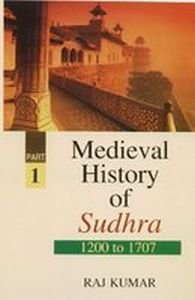
Contents: Part I: Preface. Introduction. 1. Early history of the Sudhra family. 2. Medieval history of the Sudhra race (600 to 1200 A.D.). 3. Socio-Cultural Movements (500 to 1200 A.D.). 4. Slave dynasty of the Chamar thought. 5. Marauds of Singh and Multan. 6. Chamar Imperialism (1290-1320 A.D). 7. Tughluq Dynasty (1320-1388 A.D). 8. Downfall of the Tughluq Empire and rise of Shah-Mir dynasty of Kashmir. 9. Sultan Sikandar of Kashmir and Amir Timur’s Invasions in India (1389-1420 A.D.).
Part II: 10. Kashmir under Sultan Zain-ul-Abidin (1420-1470 A.D). 11. Sources of revenue under Kashmiri Sultanates. 12. Rise of the Bhakti Movement and Babarvani as a source of the Nam-History. 13. Babar: the path--broker of nationalism. 14. Humayun: the contemplator of the sixteenth.15. The interregnum: the Suri Rulers (1540-1555 A.D.). 16. An emperor’s genius: the narrative of Akbar, during sixteenth and seventeenth century. 17. In the wake of affluence Jahangir and Jurjahan: the consort (1605-1627 A.D.). 18. Shahjahan and his early vibrations. 19. Aurangzeb: The Puritan Emperor. 20. Conclusion. Glossary of oriental terms. Bibliography. Index.
“The book entitled ‘Medieval History of Sudhra’ 1200 to 1707 gives a vivid picture of Sudhra Family, who worked for the welfare of society and its development based on historical knowledge of the forefather of the Sudhra Family from Qutab-ud-Din Aibek to Aurangzeb and Marathas. They fought against the ‘Brahminical Ideology’, which governed the society without logic and reasoning, on the basis of ‘Caste System’, which has been prevalent in the ‘Brahminical Society’ as a negative force of the society by exploiting the ancient religious ideas which were issued by the Sudhra Family on this earth. As we take the example of Qutab-ud-Din Aibek, the founder of the ‘Slave Dynasty’. He was enlightened with the ‘Truth’ called ‘Nam’ or ‘Qutab’ itself in meaning, ‘u’ stands for ‘Unique’ and ‘d’ stands for Destruction and ‘Din’ means ‘Slave of God’, and ‘Aibek’ means Moon, it shows that natural forces are equally ‘Creative’ and ‘Destructive’ which one unit of the society follow it and other do not follow it, even they are the slave of one father or God i.e., Ravidas of the Period.”
