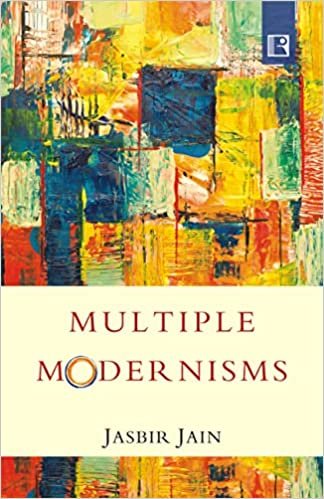
Multiple Modernisms
Contents: 1. Introduction: Multiple Modernisms. 2. Martin Luther and the Protestant Revolution. 3. The Dialogicity of Travel: Nanak’s Udasis. 4. The Other Face of the Enlightenment: Mary Wollstonecraft and the French Revolution. 5. From Madness to Violence: In Pursuit of Modernity. 6. The Dialectics of Faith and Non-Faith: Kierkegaard to Sartre. 7. The Nineteenth Century in India. 8. Explorations in the Historical Subconscious: 19th Century India and After. 9. Erasures, Silences and Recodings: The Writer in Search of Meaning. 10. Ethical Revolutionaries: The Generation of the Thirties. 11. Locating Gandhi in the History of Ideas. 12. Is Storytelling a Game of Chess? Memory, History and Recall. 13. Repetition, Difference and Creativity: Borges and Llosa. 14. The Making of the Outsider. 15. Contrapuntal Narratives: Shifting Paradigms in Comparative Literature.
Multiple Modernisms is an exploration of the plurality of modernism and its history of resurfacing at different times in different cultures. In itself a term which eludes an exact definition, it manages to project two central concepts in its shifts in history – one of the need to reconcile faith and doubt, belief and non-belief, and the other a resistance to authority and institutional power. Luther, Nanak, Descartes, Kierkegaard, Sartre all raise these issues.
Several chapters are focused on India – in fact, the thrust is on the relationship between India and Europe, as the various ideologies, movements and revolutions confront each other – for colonial and imperial structures do not function alike. Rebellions, protests, and new ideas are necessarily rooted in cultural histories. The confrontation of ideas and strategies emerged sharply in the cusp of the nineteenth-twentieth centuries.
The many aspects of Modernism are a constant provocation to human thought, a constant stirring of the mind and a continued confrontation between self and the world. The fifteen chapters traverse a long journey from the Enlightenment to Existentialism, as one travels through philosophy and politics, wars and revolutions, as the refugee emerges as the dominant figure of our times, destabilising the concepts of family and nation. The question – ‘What is Modernism’ evokes a different response each time we ask it. At the end it is the lonely human figure which confronts us.
Multiple Modernisms is a search for a more comprehensive definition of the term and its applicability to a wider human society.
