Nationalism and Ethnicity in Nepal
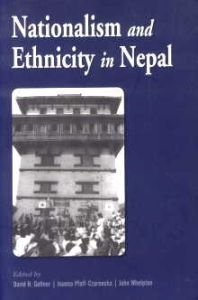
Contents: New Nepal, new ethnicities: changes since the mid 1990s. Preface. Introduction: ethnicity and nationalism in the world\'s only Hindu state/David N. Gellner. I. Dominant and diaspora identities: 1. Political identity in Nepal: state, nation and community/John Whelpton. 2. The king and cow: On a crucial symbol of Hinduization in Nepal/Axel Michaels. 3. Being Nepali without Nepal: reflections on a South Asian diaspora/Michael Hutt. II. Central Nepal: 4. Caste, communalism and communism: Newars and the Nepalese state/David N. Gellner. 5. Identity and change among the Gurungs (Tamu-mai) of Central Nepal/Alan Macfarlane. 6. The heavy loads of Tamang Identity/Ben Campbell. III. The Tarai: 7. Defining Maithil identity: Who is in charge?/Claire Burkert. 8. Losing ground, gaining ground: land and change in a Tharu community in Dang, West Nepal/Christian McDonaugh. IV. East Nepal: 9. Hinduization: the experience of the Thulung Rai/N.J. Allen. 10. Identity management and cultural change: the Yakha of East Nepal/Andrew Russell. 11. Changing concepts of ethnic identity among the Mewahang Rai/Martin Gaenszle. V. The Northern fringe: 12. Tibetan pride of place; or, why Nepal\'s Bhotiyas are not an ethnic group/Charles Ramble. VI. Conclusions: 13. Vestiges and visions: cultural change in the process of nation-building in Nepal/Joanna Pfaff-Czarnecka. 14. Nation-building, multi-ethnicity, and the Hindu state/Prayag Raj Sharma. 15. State and society in Nepal/Harka Gurung. Glossary. References. Index.
"For nearly 240 years (1768-2006) either the Shah Dynasty or their Rana Prime Ministers ruled Nepal in the name of Hinduism; in more recent times Shah Kings claimed also to embody national unity in their own person. Since the nineteenth century Nepal experienced the autocracy of the Ranas, a first experiment with parliamentarianism, guided partyless democracy led by the king, multi-party constitutional monarchy (including an elected minority communist government for nine months, 1994-5), royal reaction (2004-6) finally reversed by massive street protests, a ten-year \'People\'s War\' launched by the Maoists in 1996, followed by a peace process and elections to a Constituent Assembly in April 2008 in which the Maoists emerged as the largest single party with almost 30% of the vote. In all this, national and ethnic questions have been of crucial importance.
Originally published in 1997, this volume takes a long-term view of the various processes of ethnic and national development both before and after the re-establishment of the multi-party system in 1990, and it examines the ways that different political regimes have framed and attempted to control castes and ethnic groups. It brings together twelve carefully chose ethnographic and historical chapters covering most of the major ethnic groups and regions of Nepal. Two leading Nepali intellectuals, Prayag Raj Sharma and the Late Harka Gurung, provide concluding commentaries. For this edition a substantial new introduction brings the story up to 2008.
With its coverage of different groups and regions, Nationalism and Ethnicity in Nepal provides a rich and grounded introduction to contemporary Nepal. It will be essential reading for all South Asian specialists, for sociologists, anthropologists, and historians interested in nationalism and ethnicity, and for anyone seeking to understand how Nepal is likely to develop in future."
