Natural Disaster and Women : A Gendered Perspective
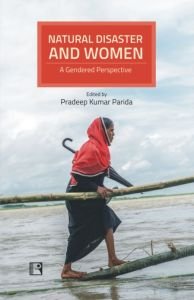
Contents: I. Introduction: 1. Natural Disaster and Women: A Gendered Perspective/Pradeep Kumar Parida. II. Gender Inequality, Susceptibility and Disaster: 2. Gender and Disaster: An Overview of Differential Vulnerabilities/Sudha Sitharaman.3. The Socio-cultural Aspects of Gendered Vulnerabilities to Disasters: Case Studies of Women-Headed Households, Post Mumbai Train Blasts, 2006/Nalini Yadav. 4. Gender Difference in PTSD, Mental Health and Quality of Life: A Focus on Female Tsunami Survivors/Neethu P.S. and Surendra Kumar Sia. 5. Dealing with Gender Vulnerability through Mediated Communication in the Tamil Nadu Floods, 2015/S. Mahalakshmi and Sunitha Kuppuswamy. III. Women’s Vulnerability and Responses to Disaster: 6. Revisiting Odisha Super Cyclone of 1999: The Barriers and Coping Mechanisms of Disabled Women to Natural Disaster / Pradeep Kumar Parida. 7. Impact of Nepal Earthquake of 2015 on Women: Challenges and Responses/Rishi Gupta. 8. Women’s Participation in Relief Work Utilizing Social Media Network/Shanmugaraj G. and Balasaravanan T. 9. Understanding Women’s Experience of Trauma and Posttraumatic Growth: A Review Study/Alphonsa Jose K. and Surendra Kumar Sia. IV. Assessing Preparedness, Recovery and Mitigation: 10. Gender Sensitivity in Disaster Risk Management: Lesson Learnt from the Chennai Floods of 2015/Suriya S. 11. Indigenous Knowledge System and Disaster Management among the Indigenous People of North-eastern Himalayas, India/Ajeet Jaiswal. 12. Natural Calamities and Native Perceptions: Evolving Effective Rehabilitation Strategies/Jesurathnam Devarapalli. 13. Disaster Diplomacy in South Asia: India’s Humanitarian Assistance Programmes in Neighbourhood/Sibaram Badatya. V. Conclusion: 14. Natural Disaster and Women: Towards a Sustainable Disaster Risk Reduction/Pradeep Kumar Parida.
It is an apparent paradox that human beings are all at once witnessing both persistent progress and increased feeling of insecurity. With sharp increase in the number of events and intensity of natural disasters, it has become a burning issue for all societies. The fact of the matter is that socio-economic development and disasters have originated in the same ongoing processes of change. Consequently, as the world population grows, some people are more exposed to hazards than others because of their specific historical contexts that are produced through interactions among the political, economic, demographic and environmental processes.
To embark on this endeavour, this volume sheds some light on the gendered vulnerabilities to natural disasters. The broad debate of this volume is to interlink gender vulnerability to disasters. It addresses some basic and relevant questions: Why and how do women face greater exposure and risk to natural disasters? What are the ways to integrate gender concerns in disaster risk reduction in order to make women and children less vulnerable? As such, this volume presents a foundation for disciplinary, multidisciplinary and interdisciplinary research for social scientists and social workers. It further provides a huge source of groundwork for science-based decision making by planners, emergency managers and other practicing professionals. (jacket)
