Odishara Bhasha Samooh: Volume 22, Part 3: Bharatiya Bhasha Lok Sarvekshan (Odiya)
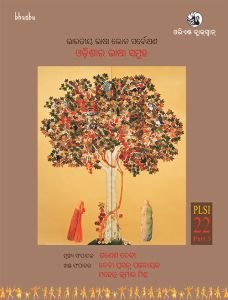
The Peoples’ Linguistic Survey of India is a right based movement for carrying out a nation-wide survey of Indian languages especially the languages of fragile communities such as nomadic, coastal, island, hill and forest communities.
There are 88 volumes in the series of People’s Linguistic Survey of India being published by us. This book is Part 3 of Volume 22, Odishara Bhasha Samooha [the Languages of Odisha] [Odiya] of The People's Linguistic Survey of India Series (PLSI) undertaken and executed by Bhasha Research and Publication Center, Baroda.
The book contains the information on language and linguistic variety of the Odisha State of India. The languages included in this book are:
Scheduled Languages : 1. Odiya 2. Santhali Non-Scheduled Languages : 1. Agariya; 2. Oraon; 3. Olar Pata 4. Kamar 5. Kishan 6. Kui 7. Kuvi 8. Kurmali 9.Koda 10. Koshali 11. Koya 12. Gadaba 13. Gondi 14. Juan 15. Jhadiya Parja 16. Don 17. Didayee 18. Delki Khadiya 19. Durva 20. Paudi Bhuyan 21. Bada Prja 22. Banjara 23. Bonda 24. Birhal 25. Binjhal 26. Bhatara 27. Bhunjia 28. Manda 29. Munda 30. Mundari 31. Saura 32. Sadari 33. Halvi 34. Ho 35 Lodha
This volume looks at history, linguistic details, grammar, literature and word list of the languages included, covering a wide linguistic range across books, religious texts and periodicals. It brings together the finest scholars as well as teachers, nomadic peoples and laymen to do the research in the area of languages of Odisha.
Unique features:
1. Competition: There is as yet no comprehensive work done on languages apart from the Grierson’s survey which was done way back some 100 years ago during the British regime in India.
2. India-focused unique feature: The volume on Odisha’s scheduled and non-scheduled languages designed to understand the impact of languages in community, caste, religion and multiplicity of culture. This sets the book apart from the earlier survey done by foreign authors.
3. Style: Written in simple language, accessible to all readers and research scholars. (jacket)
