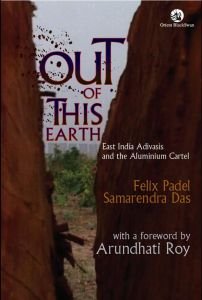
Out of this Earth : East India Adivasis and the Aluminium Cartel
Contents: Foreword by Arundhati Roy. PREFACE The Aluminium Companies and How They Affect Us. PART I. Sustainable Lifestyles in an Age of Aluminium: 1. It all starts with dirt. 2. Aluminium’s Secret History. 3. Konds and Khondalite. 4. Bauxite Business in Orissa. 5. Kashipur’s Development. 6. Lanjigarh: Vedanta’s Assault on the Mountain of Law. PART II. Niyam Raja Meets the World-Wide Web: Aluminium’s Social Structure. 7. Under Mining Law. 8. Aluminium India. 9. The World-Wide Web. PART III. Aluminum for Defence and Prosperity: 10. Aluminium Wars. 11. Prosperity and Price Fixing. 12. The Real Costs of Production. 13. Cultural Genocide: The Real Impacts of Development-Induced Displacement. 14. Cost Benefit Analysis. PART IV. Company Rule and the System of Endemic Exploitation: 15. Corporate Takeover. 16. Starvation Deaths and Foreign Aid. 17.Moneylender Colonialism and Bad Economics: The World Bank Cartel. 18. NGOs and the Culture of Appropriation. 19. Homo Hierarchicus: Company Man. PART V. Movements for Life: 20. Andolan. 21. Sense of Sacredness. Notes to the Chapters. Glossary: Dramatis Personae. List of Illustrations. Appendices. Bibliography.
Capping the biggest mountains in south Odisha are some of the world’s best deposits of Bauxite, the ore for aluminium-mineral wealth to bring prosperity to one of India’s poorest states. But for tribal people who have lived around them since history began, these mountains are sacred-not a resource to be exploited, but a source of life itself, through the water they store, and release in perennial streams.
So metal factories, built in tribal areas with a view to mining the mountain summits, are seen as a new colonial invasion, to be resisted. Thousands of Adivasis have already been displaced, in a process of cultural genocide, that involves notorious scams, and corrupts the values of civil society at the same time as wasting irreplaceable resources.
Aluminium is a metal we take for granted in hundreds of artefacts. But what do we understand about its real costs? This book traces a hidden history, coming alive through hundreds of voices and stories, of how one country after another swallowed promises of prosperity, and plunged into a cycle of exploitation and unrepayable debt. What is the link between the massive meltdown of Iceland’s banks, and the promotion of dams and smelters? Between the mafia-style looting of Russia’s assets and the rise to power of a succession of aluminium barons? Why did the US set a limit during the 1950s-60s and start to outsource aluminium factories to other, poorer countries, such as Ghana, Guinea, Jamaica, India? The answer lies in hidden subsidies and prohibitive externality costs.
Making aluminium consumes vast quantities of water and electricity. The industry is driven by a cartel that fuses mining companies, investment bankers, government deals, metals traders and arms manufacturers. Secret deals motivate the projects. Behind these stand metals traders in derivatives, in London and other capitals, whose deals drive the industry through futures contracts.
Adivasis who oppose this invasion of their landscape by aluminium projects in East India face an enemy as remorseless and difficult to fathom as the colonial East India Company. Mining projects are fuelled by an entrenched notion of development so powerful, that democracy and human rights often seem to wither in the face of it.
This penetrating anthropological study uncovers an epic clash of ideologies that pits metals traders against Indian citizens whose lifestyle is a model of long-term sustainability. The cover is a still from the documentary film by Amarendra and Samarendra Das: Wira Pdika: Matiro Poko, Company Loko (Earth Worm, Company Man, 2005).
