Pakistan : Nationalism Without a Nation
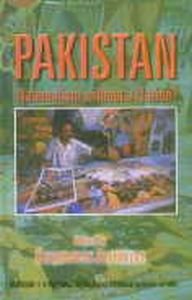
Contents: Introduction. I. The failed (Islamic) state : ethnic conflicts and sectarianism: 1. The Punjabization of Pakistan: myth of reality?/Ian Talbot. 2. In and out of power but not down and out: Mohajir identity politics/Yunas Samad. 3. Islam, the state and the rise of sectarian Militancy in Pakistan/S.V.R. Nasr. 4. The regional dimension of sectarian conflicts in Pakistan/Mariam Abou Zahab. II. At the crossroad of regional tensions: How to articulate a nationalist-cum-Islamic ideology?: 5. From official Islam to Islamism: the rise of Dawat-ul-Irshad and Lashkar-e-Taiba/Saeed Shafqat. 6. The Taliban: a strategic tool for Pakistan/Olivier Roy. 7. Pakistan and the Taliban: state policy, religious networks and political connections/Gilles Dorronsoro. 8. The Islamic dimensions of the Kashmir insurgency/Sumit Ganguly. 9. Pakistan and the ‘India syndrome’: between Kashmir and the nuclear predicament/Jean-Luc Racine. 10. The geopolitics of Pakistan’s energy supply/Frederic Grare. III. How to project nationalism? The foreign policy of Pakistan in its region: 11. The dialectic between domestic politics and foreign policy/Mohammad Waseem. 12. The ‘Multi-vocal state’: the policy of Pakistan on Kashmir/Amelie Blom. 13. Does the Army shape Pakistan’s foreign policy?/Ian Talbot. Conclusion.
"Pakistan has become a key actor in the realm of international relations post 11 September 2001. Like after the Soviet invasion of Afghanistan, its geopolitical situation has made it the main base for military operations and the fight against Bin Laden’s Jihadist network. But the strategic position, this time round, was also due to its special links with the Taliban.
Pakistan is involved in regional tensions and is itself undermined by a great deal of ethnic tensions. This book provides an up to date account of the country’s extraordinarily complicated political tapestry which throws up so many questions—the definition of identity, the intersection of religious and ethnic factors, a deeply flawed institutionalization of Democracy, control of the state, and the potentially explosive cross impacts of regional and domestic politics.
While they built Pakistan on the basis of ‘Islamic Ideology’, the Mohajirs are now developing separatist tendencies. The Pashtun, the Sindhi and the Baluch nationalists are not as vocal but they still endorse centrifugal forces due to their resentment of what they call the ‘Punjabi hegemony’. Islam too has failed as a cementing force because of the increasingly violent Shia-Sunni conflict.
National integration remains a remote prospect, but Pakistani nationalism exists, largely because it expresses itself against others—India, first of all. Kashmir has been for years the main bone of contention between India and Pakistan and it has helped this country to mobilize unitedly. Pakistan’s foreign policy, be it shaped by civilians or military rulers, is largely over-determined by this strategy."
