Panchayati Raj and Urban Planning
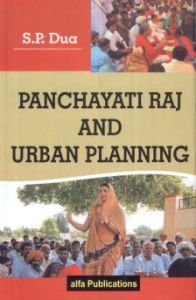
Contents: Preface. 1. Introduction Panchayati Raj. 2. Panchayat system and community development. 3. Governance and local Government. 4. Ministry of Panchayati Raj. 5. The constitution 73rd amendment act, 1992. 6. The provisions of Panchayats act, 1996. 7. Urban planning. 8. Urban renewal. 9. Principles of intelligent urbanism. 10. New urbanism. 11. Smart growth. 12. Sustainable design. 13. Policy making in India for rural development. 14. Environmental impact assessment. Index.
The term Panchayati Raj is relatively new, having originated during the British administration Raj literally means governance or government. Mahatma Gandhi advocated Panchayati Raj, a decentralised form of Government where each village is responsible for its own affairs, as the foundation of India\'s political system. His term for such a vision was Gram Swaraj . The basic concept of Panchayati Raj is that the villagers should think, decide and act for their own socio-economic interests.
Thus Panchayati Raj act is related to village self governance, where the people in the form of an organisation will think decide and act for their collective interest. Self government allows us to decide about ourselves without hampering others interest.
Urban planning is required to manage the city, order to avoid, or alleviate, common urban problems such as city decay, overcrowding, traffic and other forms of congestion. Modern urban planning and redevelopment arose in response to the disorder and squalor of the slums created by the industrial revolution. (jacket)
