Paradoxical Women: Irigaray Femininity and Eugene O\'Neil
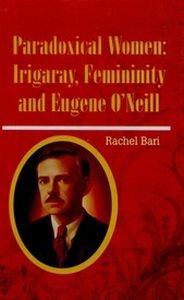
The book, PARADOXICAL WOMEN: IRIGARAY, FEMININITY AND EUGENE O\'NEIL deciphers the Feminist intervention, interrogating the nuances of understanding \'Women\' and the \'paradoxical approaches\' of Women by one of the most powerful of American playwrights. Eugene O\'Neill. Sigmund Freud\'s Psychoanalytic theorizing on the American Consciousness felt a sort of reluctance, if not an ardent admirer in the theatrical vision of the American playwright. Interestingly, Freud and Femininity was already an ingrained development in articles written between 1920 and 1930s. Gainful of the acceptance, it was wide enough to be taken as the last word on Femininity.
With the entry of Jacques Lacan and his re-reading of Freud, Woman\'s Subjectivity and Sexuality were tied to Language and Culture. Feminist critics like Julia Kristeva, Helene Cixous and Luce Irigaray critique Lacan disqualifying his symbolic realm on language relegating Woman to a marginal state of abandonment and dereliction. O\'Neill\'s notable plays Desire under the Elms (1924), Strange Interlude (1926-27), Mourning Becomes Electra (1929-31) and Long Day\'s Journey into Night (1931-34) decode clear influences of the Freudian elaborations. Women characters from the Freudian plays of Eugene O\'Neill are recognized as stereotypes. Recognizing the Irigarayan tenets of Psychoanalysis, as the book reveals, the symbolic subjectivity-thorugh stereotypes-rebel framework sysnthesizes a differing symbolic for Women. Through a reading of O\'Neill\'s women characters through the tenets of Irigaray, this work adopts a flexibility to recreate the linguistic model for women by theorizing the vital concerns of his Women characters in registering their Protest against the Women(less) World. Offering the requisite gendered space for the operatives of literary language, this reading attempts to decode the symbolic and the American cultural realm of critical enquiry.
