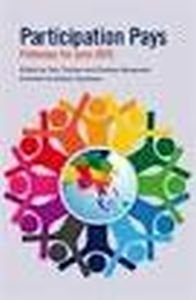
Participation Pays: Pathways for Post 2015
Contents: Foreword. Preface. 1. Introduction: powering knowledge from the margins/Tom Thomas and Pradeep Narayanan. 2. Breaking the barriers to information: community led land mapping in Bihar/Anindo Banerjee, Rohan Preece and anusha Chandrasekharan. 3. Building consensus methodically: community rebuilding in the Maldives/M.J. Joseph, Ravikant Kisana and Mary George. 4. Knowledge base: towards a community-owned monitoring system/Rohan Preece, Stanley Joseph, Gayathri Sarangan and Sowmyaa Bharadwaj. 5. Lost policies” locating access to infrastructure and services in rural India/Tom Thomas, Moulasha Kader and Rohan Preece. 6. A new deluge? People and aid in the aftermath of disaster/Moulasha Kader, Ajai Kuruvila and Shireen Kurian. 7. Subverting for good: sex workers and stigma/Sowmyaa Bharadwaj, Shalini Mishra and Aruna Mohan Raj. 8. Making people count: from beneficiaries to evaluators/Anindo Banerjee, Rohan Preece and M.J. Joseph.9. Reimagining development: marginalized people and the post 2015 agenda/Pradeep Narayanan, Sowmyaa Bharadwaj and Anusha Chandrasekharan. 10. Conclusion: pathways to post 2015/Tom Thomas and Pradeep Naraynan. Index.
Participation Pays attempts to show how beneficiaries of aid can challenge and overcome conventional power arrangements set up by donors and development agencies. It does so through a focus on community knowledge and self-generated data, control of which enables greater ownership and direction of development processes. These projects involved members of marginalized and resource-poor communities including landless people, female sex workers, tribal people, and people affected by a natural disaster. Eight thematic case studies are featured, seven from India and one from the Maldives. Participation Pays argues for the need, in any vibrant democracy, for multiple ways of making development more accountable to excluded communities. In doing so, the book invites an understanding of marginalized people not simply as beneficiaries of technical solutions, but – through the work of participatory development projects – architects of a politics of equity and democratization. (jacket)
