Patna Kalam: Patna School of Painting 1760-1945
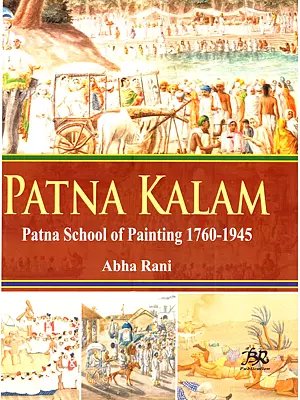
The present book on Patna Kalam explores the historical, cultural, and artistic significance of the Patna School of Painting, which flourished in the late eighteenth and nineteenth centuries under colonial rule. It traces the evolution of the style from Mughal miniature traditions into a distinctive regional expression known for its precise linear drawing, restrained yet vibrant colour palette, and detailed depictions of everyday life. The study also examines the social and economic context in which the artists worked, highlighting their interaction with diverse patrons, including local elites and British officials. In doing so, the book situates Patna Kalam within the broader narrative of Indian art history, presenting it as a vital bridge between Mughal heritage and colonial modernity. A notable strength of the volume is its extensive inclusion of carefully selected paintings, which enrich the reader's understanding of the tradition. These reproduced works function not merely as illustrations but as visual documents that reveal the style's technical finesse, delicate shading, and narrative sensitivity. By showcasing scenes of occupations, festivals, markets, and domestic life, the book allows readers to appreciate the realism and observational detailed characteristic of Patna artists. The inclusion of works executed on wasli paper, mica, and ivory further highlights the versatility and craftsmanship of the painters. Together, these visual examples enhance the scholarly discussion, making the book both academically rigorous and visually compelling.
