Physical Education Health Sports and Games Encyclopaedia (4 Vols-Set)
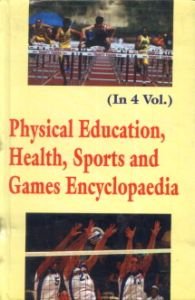
Contents: Vol. I: Part I. Principles and history of physical education: 1. Education and physical education : an introduction. 2. Psychological principles of physical education. 3. biological principles of physical education. 4. The changing characteristics of physical education. 5. Sociological principles of physical education. 6. Politics and economy in physical education and sports. 7. Historical background of physical education in India. 8. Sport schemes and institutions in India. 9. History of physical education and sports in Greece, Egypt and Rome. 10. Development of physical education in Germany, Sweden, USA and China. 11. Olympic games. 12. Asian games. II. Physical fitness and training in sports: 1. Fundamentals of sports training. 2. Training plan. 3. Over training, training load and recovery. 4. Physical fitness. 5. Components of sports training theory and practical. 6. Skill, technique, tactics and ability. 7. Training processes. 8. Reference material for power point slides.
Vol. II: Part III: Practical meditation. IV. Evaluation in physical education and sports: 1. Evaluation --an introduction. 2. Evaluation processes and techniques. 3. Evaluation and measurement of strength and skill. 4. Focuses of evaluation. 5. Curriculum evaluation. 6. Supervision and inspection. 7. Public relation. 8. Programme planning. 9. Lesson planning. 10. Class management. 11. Evaluation of performance tests. V. Activities for children: 1. Historical sketch of Pyramids in general and gymnastics Pyramids in particular. 2. Types of Pyramids. 3. How to build and dismantle Pyramids? 4. Qualities that develop through Pyramids. 5. How to arrange Pyramids display? 6. Construction of Pyramids with different numbers. 7. Pyramids with apparatus. 8. Physical preparation. Bibliography. Glossary. Index.
Vol. III: VI. Encyclopaedia of sports medicine: 1. What is sports medicine? 2. Drugs and the sportsperson. 3. Sports medicine--its forms and descriptions. 4. Disorders of the locomotive system. 5. The respiratory system. 6. Care and treatment of skin disorders and diseases. 7. Significance of strength and flexibility training in sports medicine. 8. Physiology of skeletal muscle. 9. Medical conditions: cardiovascular diseases and respiratory and other diseases. 10. Doctrines of prevention of injury. 11. Significance of rehabilitation in sports medicine. VII. P.T. Drills for children: 1. A manual of drill. VIII. Nutrition and diet for sportsmen: 1. General importance of nutrition. 2. Nutrition. 3. Nutrition in cricket. 4. Nutrition in sports. 5. Nutrition as means of recovery. 6. Nutritional requirements covering.
Vol. IV: Part: IX. Professional preparation in physical education and sports: 1. Professional preparation in physical education. 2. Career development in physical education. 3. Changing philosophies for physical education and sports. 4. Total curriculum: general guidelines. 5. Physical education as a profession. 6. Qualities and qualifications of physical educators. 7. Teacher training, problems of teachers and evaluation. 8. Student leadership. 9. Politics and economy in physical education and sports. 10. In service education. 11. Teacher\'s education: objectives. 12. National educational policies and commissions. 13. Important sport schemes and institutions. 14. The mainstreamed programme in physical education and sports. X. Psychology in sports: 1. Sports psychology: an introduction. 2. Attention and concentration in sports. 3. Neurophysiology of arousal. 4. Coping strategies in sports. 5. Anxiety, arousal and stress relationships. 6. Aggression and violence in sports. 7. Application of sports psychology. 8. Motivation. 9. Motor skill learning. 10. Behaviour. 11. Personality. 12. Needs and problems of adolescence. 13. Leadership. 14. Growth and development. 15. Instincts and emotions.
