Qualitative and Quantitative Attributes of Environmental Impact Assessments
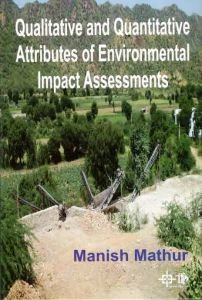
Contents: 1. Fundaments of environmental impact assessment: meaning, history and objectives. 2. Attributes of EIA process. 3. EIA methodologies. 4. Environmental impact assessment for air environment. 5. EIA for water resources. 6. Environmental impact assessment of soil qualities. 7. Environmental impact assessment of noise. 8. Environmental impact assessment of biological components. 9. Traditional knowledge and impact assessment. 10. Impact assessment of socio-economic environment. 11. EIA implementation and follow-up. References.
This book provides pin point information’s linked with various attributes of EIA viz., related with their needs, historical developments, methods, important steps, role of various international and national organizations etc. First three chapter’s deals with basics of EIA methodology and their protocol, comparative assessment of EIA’s in various developed and developing countries, role of World Bank, Asian Development Bank, UNEP and MoEF. SWOFT analysis of EIA’s in various sectors provided in chapter two. Chapter three relates with methodologies that comprises traditional EIA methods as well as some new approaches like TOPSIS, CBI, DPSIR etc. In additions, objectives, descriptions and web address of 20 different simulation models also presented. Reaming chapters (eight) deals with EIA in different sectors like transport, air, nose, biodiversity, socio-economic, soil, evaluation and traditional knowledge. For all these chapters quantitative approaches available in different research findings provided and interpreted sufficiently.
