Rethinking Tribe in Indian Context : Realities, Issues and Challenges
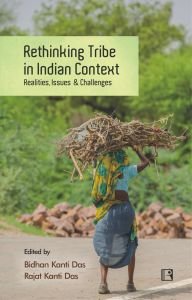
Contents: 1. Introduction/Rajat Kanti Das and Bidhan Kanti Das. 2. Contextualising Indian Tribes/Rajat Kanti Das. 3. Conceptualising the Context/Samir Kumar Das. 4. Application and Distortion of Indigeneity as an Expression of Tribe/Rajat Kanti Das. 5. On the Question of Inequality in Tribal Social Formation/Rajatsubhra Mukhopadhyay. 6. Politics of Identity and Growing Tribalism in the Darjeeling Hills/Swatasiddha Sarkar.
7. The Teesta Warriors/Jayanta Madhab Tamuly. 8. The Need for Promoting Indigenous Indicators to Tribal Development/Arun D. Paul. 9. Towards Demarginalisation of the Lodhas in West Bengal/Santanu Panda and Abhijit Guha. 10. Forest Policies and Tribal Livelihood/Pradeep Kumar Mishra.
11. Making Forest Dwellers Deprived/Bidhan Kanti Das. 12. Tribe, Political Party and Local Self-Government/Dayabati Roy. 13. Conceptualising Tribal Autonomous Rule in Tripura/Dipannita Chakraborty. 14. Salvaging a Common Descent and Lineage Between an Ex-'Criminal Tribe' of India and the Present-Day Gypsies of Europe/Subir Rana.15. Tribal Entrepreneurial Growth/Rajanita Das Purkayastha.
The general understanding about tribes in India is somewhat hazy, confusing and at times biased. Tribals are almost invariably equated with marginalised, deprived or disadvantaged groups. With the rapid change of the so-called 'development' scenario since independence, it is imperative to re-examine and re-assess tribes in the Indian context with a view to underline the major concepts that go with tribal formation and see them in the context of their geographical location, historical perspective, ethnicity-linked development and displacement, fallacy of administrative categorisation, identity politics, economic priorities and growing political consciousness.
At the conceptual level, tribes in India do not form a unified category and not all of them could be described in a unilateral manner. Clearly there is a need for rethinking the rather one-sided view of tribes in terms of social exclusion and inclusion propagated by those who are primarily engaged in academic theorising and by those who in the name of governance use it rather mechanically as a set pattern.
The present volume makes a sincere effort to critically examine the conceptual process fraught with cross-current of ideas that goes with tribal formation. This volume presents realities, issues and challenges confronting tribes in various contexts in contemporary India. Besides tribal activists and policy makers, the book will be of interest to a broad spectrum of readers including researchers and students of anthropology, sociology, political science, economics, tribal studies and social work.(jacket)
