SAARC in the Twenty-First Century: Towards a Cooperative Future
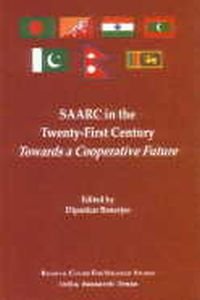
Contents: Foreword. Introduction. I. Vision of SAARC in the twenty-first century: 1. Vision of SAARC for the twenty-first century/C.M. Shafi Sami. 2. Possibilities for SAARC in the twenty-first century in the light of centuries past/Surjit Mansingh. 3. Political and security roles of SAARC in the twenty-first century: a Bangladesh perspective/Al Masud Hasanuzzaman. II. Developing economic cooperation: 4. SAPTA and its impact/Mustafizur Rahman. 5. South Asian preferential trading agreement: an assessment of its impact/I.N. Mukherji. 6. Economic cooperation under a regional framework: the constraints and challenges for SAARC/Dushni Weerakoon. 7. Reinventing SAARC economic cooperation: responding to the new economy/Poonam Barua. III. Enhancing social-sector cooperation: 8. Promoting human security in South Asia through multilateral cooperation/Arabinda Acharya. 9. Emerging social dimensions and SAARC in the twenty-first century/Lok Raj Baral. 10. Cultural development in South Asia/Mossart Qadeem. IV. Developing institutional structures and other issues: 11. SAARC: is modification of the institutional framework necessary?/Nishchal Nath Pandey. 12. SAARC in the twenty-first century: time to re-examine/Pervaiz Iqbal Cheema. 13. SAARC: institutional structure and other issues/Niaz A. Naik. 14. SAARC: process of institutionalization of regional cooperation/Ram Babu Dhakal. 15. SAARC: the fundamentals revisited/I.P. Khosla. 16. SAARC: institutional structure and other issues/Khalid Mahmood. 17. SAARC in the twenty-first century – concluding remarks on behalf of the secretary general/Amit Dasgupta. Index.
"SAARC is the only regional organisation for South Asia. If regional cooperation is the key to future progress and prosperity it is imperative that this institution be strengthened. From its mid teen years, SAARC is now poised to arrive at maturity in the new millennia. How should it shape itself in the future?
"First, is the need for a shared vision. What should be done to develop a common vision that is shared by all its constituents? How should we best harmonise this in keeping with its charter? Where should it look for its ideological moorings and inspiration? These are the initial questions that challenge the South Asian intellectual community and which it should consider in order to evolve mechanisms to make the organization more effective and provide it with a considered plan of action.
"The book goes on to address issues related to developing economic co-operation, social sector cooperation and strengthening SAARC’s institutional structure. How should its noble objectives be realised in practice? How can positive interaction in the region be speeded up to make these goals possible in a time frame that meet the aspirations of the people?
"This book provides many of the answers, but more important raises the questions that need to be asked. The eminent scholars and practitioners gathered at the conference, supported by the Ford Foundation, have provided a very important frame of reference to address these issues." (jacket)
