Science and Society in India 1750-2000
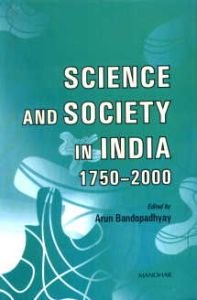
Contents: Preface. 1. Introduction/Arun Bandopadhyay. 2. HISTEM in South Asia: an overview/Deepak Kumar. 3. Networks of medicine: trade and medico-botanical knowledge on the eighteenth-century coromandel coast/Pratik Chakrabarti. 4. Mirza Abu Talib and his European Sojourn: an Indian savant\'s encounter with modernity and science in the early nineteenth century/S. Irfan Habib. 5. Imperialism, medicine, and women\'s health in nineteenth-century India/Sujata Mukherjee. 6. Plague and prophylactics: interrogating colonial medical intervention in Eastern India/Arabinda Samanta. 7. Coping with epidemic: responses in Bombay Presidency, 1900-1919/Mridula Ramanna. 8. Seeing like a river: the Bengal Presidency\'s hydraulic transition/Rohan D\'Souza. 9. Technology and defence production personnel under colonial dependence: Cossipore factory in the 1890s/Arun Bandopadhyay. 10. Communicating science: the Bose \'style\' in perspective/Madhumita Majumdar. 11. The world of an engineer: M. Visvesvaraya and irrigation engineering in twentieth-century India/Raj Sekhar Basu. 12. The re-inheritance of heritage: the construction of the Shubhankari tradition in colonial and post-colonial Bengal/Santanu Chacraverti. 13. Finding a home for the history of science in post-colonial India (1950-1960): the influence of Joseph Needham and the role of UNESCO/Dhruv Raina. 14. Successes and failures in the organization of research for industrial development in the CSIR system of laboratories/Dinesh Abrol.
"Approaches to the study of history of science underwent critical changes in the last two centuries before they could more definitively tilt towards the social dimensions of the making of science. The development of history of science during the last fifty years has been marked by a proliferation of methods and perspectives rather than by the emergence of a consensus.
Given this general background of the intellectual tradition of writing history of science, an effort is made here to assemble a group of scholars from different parts of India to write about 250 years of development of \'science\' in the Indian context, covering late pre-colonial, colonial and post-colonial periods. The present volume is a selected and revised version of the original presentation made in a national seminar at the University of Calcutta.
The contributions revolve around a few thematic contexts: the east-west encounter, the diffusion theory, the colonial impact, the nationalist and the post-colonial response and globalization." (jacket)
