State of India\'s Pollution
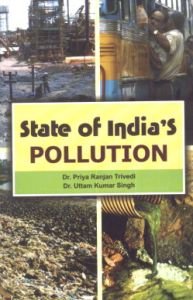
Contents: Foreword. 1. Introduction to India’s pollution. 2. Water quality monitoring. 3. National air quality monitoring programme. 4. Municipal solid waste management. 5. Ambient air quality monitoring. 6. Pollution related cases in different courts in India. 7. Pollution control implementation. 8. Guidelines for transportation of hazardous wastes. 9. Pollution abatement. Bibliography. Index.
The Government of India has established the Central Pollution Control Board (CPCB) with a view to monitoring and controlling pollution as a statutory organisation constituted in September 1974 under the water (Prevention and Control of Pollution ) Act 1974.
The CPCB was entrusted with the powers and functions under the air (Prevention and Control of Pollution) Act 1981. It serves as a field formation and also provides technical services to the ministry of Environment and Forests of the Provisions of the Environment (Protection) Act 1986. Principal functions of the CPCB, as spelt out in the water (Prevention and Control of Pollution) Act 1974 and the Air (Prevention and Control of Pollution) Act 1981 are (i) to promote cleanliness of steams and wells in different areas of the states by prevention, control and abatement of water pollution, and (ii) to improve the equality of air and to prevent, control or abater air pollution in the country.
Air Quality Monitoring is an important part of the air quality management. The National Ambient Air Quality Monitoring (NAAQM) programme has been established with objectives to determine the present with objectives to determine the present air quality status and trends and to control and regulate pollution form industries and other source to meet the air quality standards. It also provides background air quality data needed for industrial siting and town planning. Besides this, CPCB has an automatic monitoring station at Indraprastha Estate near ITO Intersection in New Delhi. At this station Respirable Suspended Particulate Matter (RSPM), Carbon Monoxide (CO), Ozone (O3), Sulphur Dioxide (SO2), Nitrogen Dioxide (NO2) and Suspended Particulate Matter (SPM) are being monitored regularly.
This book will be of immense help to all those contemplating to acquire expert knowledge of the pollution related issues in the context of our own country.
