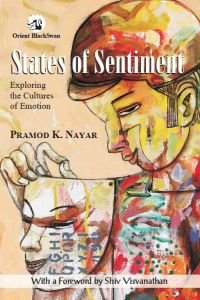
States of Sentiment : Exploring the Cultures of Emotion
Contents: Preface. Foreword: Overture to a Study of Emotions by Shiv Visvanathan. Acknowledgements. Introduction: Emotion Cultures and Cultural Emotion Studies. I. Smile: Cultures of Well-being: 1. The Idea of Well-being. 2. Well-being and Sociality. 3. Spectacles of Well-being. 4. Well-being Cultures. 5. The Transformational Citizen. II. Scars: Cultures of Suffering: 1. The Idea of suffering. 2. Suffering and its Affective Sociality. 3. Scar Culture, Extreme. 4. Cultures and Tele-Trauma. 5. The Trauma-Aesthetic. 6. Suffering and its Collaterals. 7. Spectacles of Sentiment. 8. Precarious Lives, Witnessing and the Coming Community. III. Shudders: Cultures of Aversion: 1. The Idea of Aversion. 2. Aversion Cultures. 3. The Rhetorics of Aversion. 4. Aversion Spectacle. IV. Yearning: Cultures of Hope: 1. The Idea of Hope. 2. Utopianism and Hope. 3. Spectacles of Hope-cultures. 4. Utopian Processes and Practices. Bibliography. Index.
This book proposes that our responses to various situations, events and representations are not entirely private, individual and internal. They have a crucial social dimension. Emotions are a result of the internalisation of cultural codes and discourses that inform, and even determine the appropriateness or inappropriateness of emotional responses. We see a terrorist as a threat, a cyclone as worrying, a rags-to-riches story as a feel-good moment. We mourn the sudden death of Michael Jackson, we rejoice in the victory of a triumphant Tendulkar and we react with horror and shock to 9/11. All of these are emotional responses to specific representational strategies that present these people and events in particular ways. These strategies in turn construct our emotional relations to the events and people. Exactly how sentiments of care, passion, desire, pleasure, fear, sympathy or pity are discursively commodified (made a commodity) in the mass media, films, reportage and the other public culture forms today is the subject of this book. It demonstrates how cultures today are getting emotion-driven.
The book is organised around four sentimentswell-being, suffering, aversion and hope. It uses reality TV, hate speech, self-help literature, media coverage of 9/11 and 26/11, autobiographies, websites and films, and blends theoretical insights with elements of innovative inquiry, to show how emotions are packaged and how these emotions then determine social relations itself.
