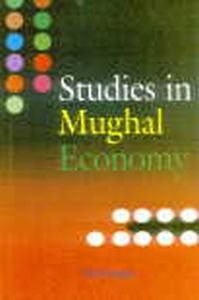
Studies in Mughal Economy : 1556-1707
Contents: 1. Urban producers. 2. A fresh analysis of the 19 years revenue rates preserved in Ain. 3. Village under the Mughals. 4. Peasantry: how much needed & how much neglected? 5. Surat customhouse - 17th C. 6. Merchant's share in agricultural surplus. 7. Rural basis of urban crafts 17th C. 8. Ghasdana. 9. Failure of Indian merchants to form trading corporation. 10. Mulla Muhammad Ali. Bibliography. Index.
"The economic history of the Mughal empire needs revamping. Reasons are genuine. The availability of new material is one and the change in people's liking is the other. People are no more interested in monarchy and it's elite, but, want to know more about common - poor men as how they lived, worked and earned livelihood? For rewriting history it is most essential that more and more new themes are explored and they are investigated through extensive and critical use of sources.
"The book Studies in Mughal Economy covering the period from Akbar down to 1726 A.D. has been set with a similar aim. The themes, it has chapter wise taken up, relate to: (i) urban producers; (ii) agrarian experiments of Akbar, (iii) types of villages in Mughal empire and agrarian relations prevailing in them; (iv) peasantry continued to be a neglected class; (v) Surat customhouse instrumental to import and export trade; (vi) merchants share in agricultural surplus; (vii) rural-urban economic links; (viii) ghasdana - the fodder money collected by the Marathas; (ix) the indigenous merchants failed to form trading corporations and (x) role of Mulla Muhammad Ali, the merchant prince of Surat." (jacket)
